

 EN
EN
 JA
JA ZH
ZH





 All New Pipes














Ask a question about this product.
Measurements & Other Details
- Length: 5.74 in./145.80 mm.
- Weight: 2.05 oz./58.06 g.
- Bowl Height: 2.01 in./51.05 mm.
- Chamber Depth: 1.60 in./40.64 mm.
- Chamber Diameter: 0.71 in./18.03 mm.
- Outside Diameter: 1.71 in./43.43 mm.
- Stem Material: Vulcanite
- Filter: None
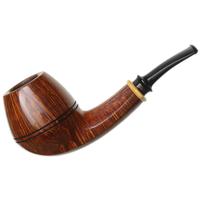
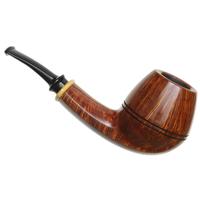
- Shape: Bent Bulldog
- Finish: Smooth
- Material: Briar
- Country: Denmark
About This Pipe
The daughter of renowned Danish artisan Kurt Balleby, Tine Balleby is an extremely talented artisan in her own right, boasting a shaping style true to the Danish tradition which honors the designs pioneered by her father. Initially unsure of whether she would enjoy the art of pipe carving, Tine was encouraged by her father to try it out, and she quickly discovered that the solitary, detail-oriented nature of pipe making was something which deeply appealed to her creative character. Taught by her father, Tine absorbed not only his finely honed skills, but his passion and deep knowledge of the craft, learning all of the minute aspects of carving that culminate in a truly excellent pipe. Marked by a meticulous approach to shaping, drilling, and finishing, Tine's pipes are precisely rendered and expertly engineered for phenomenal looks and functionality.
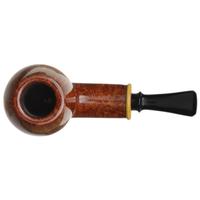
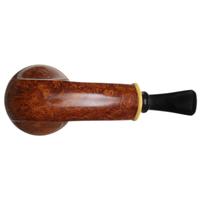
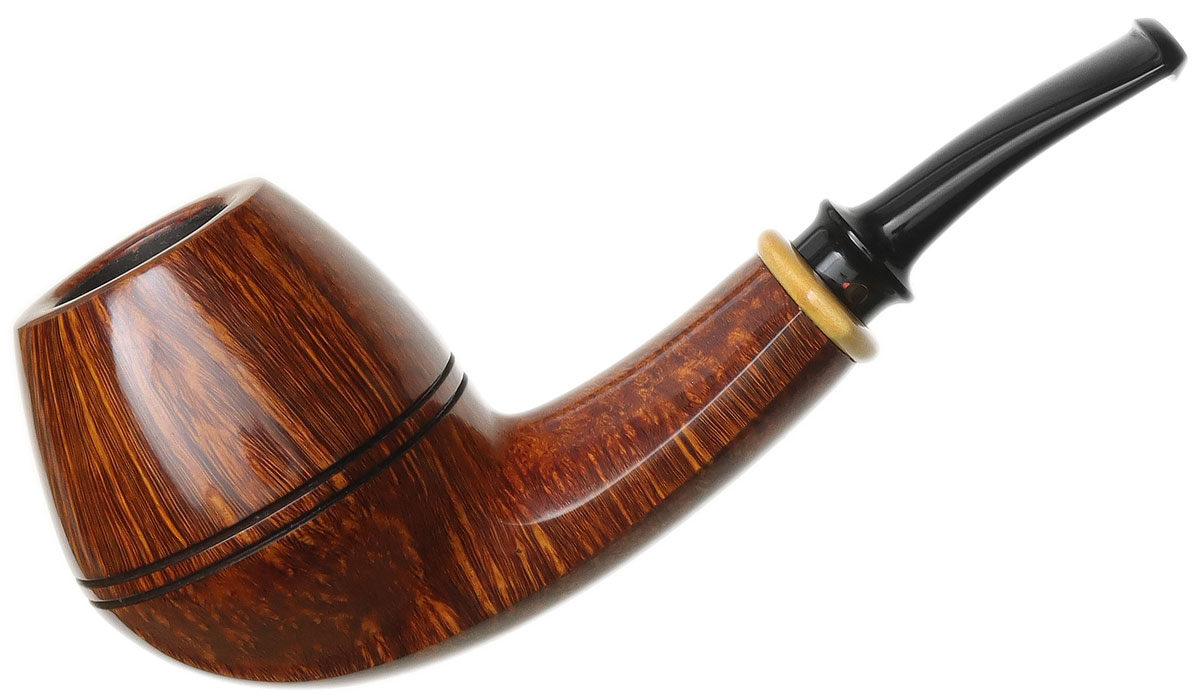
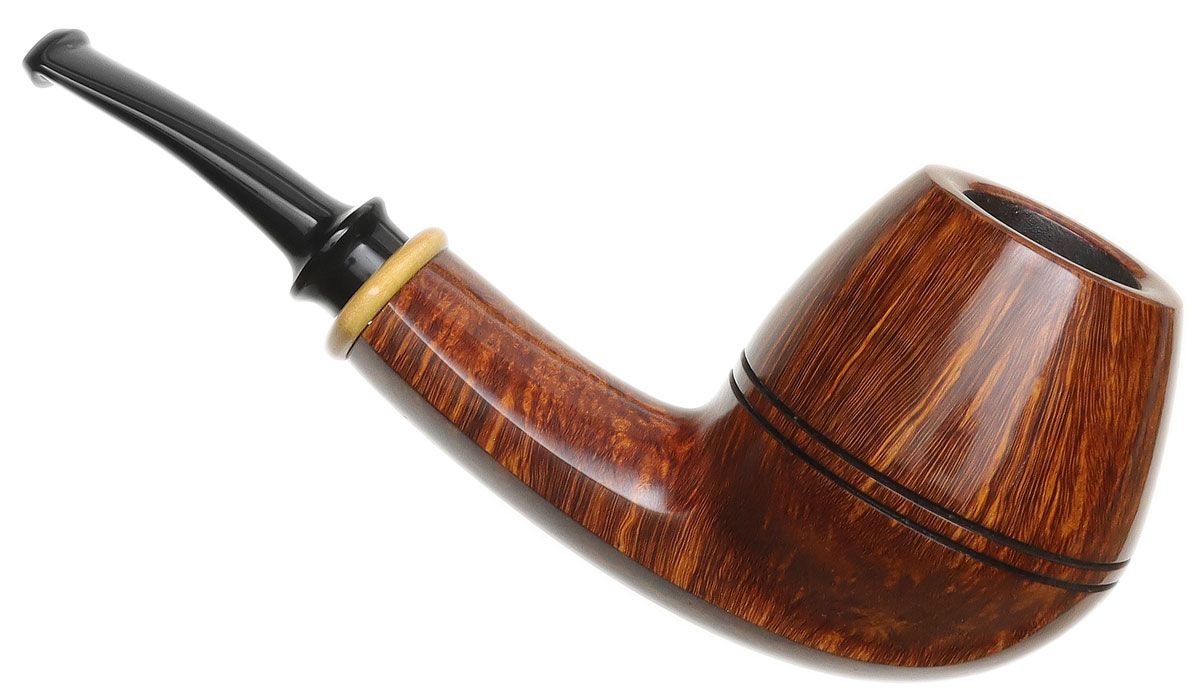
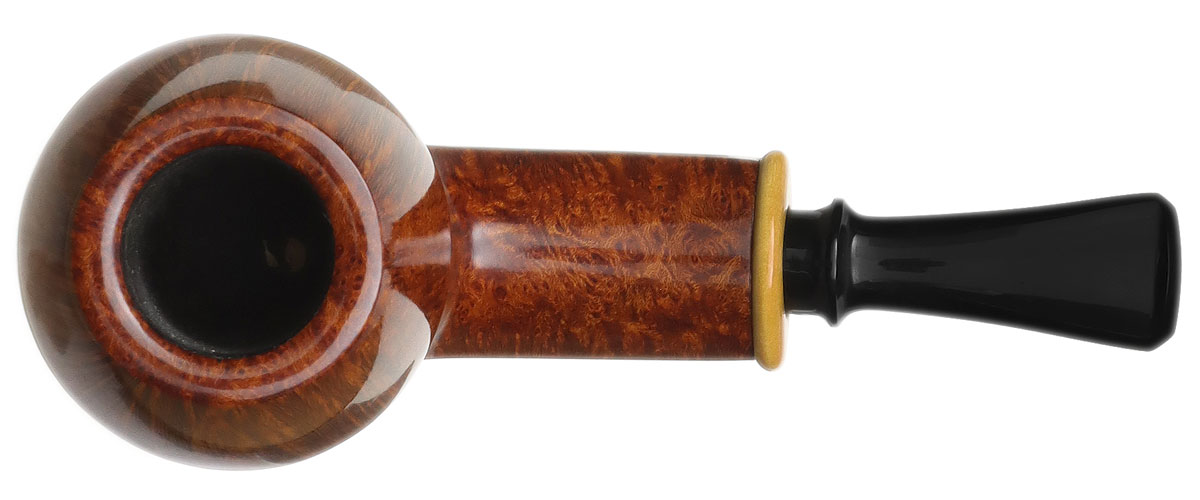
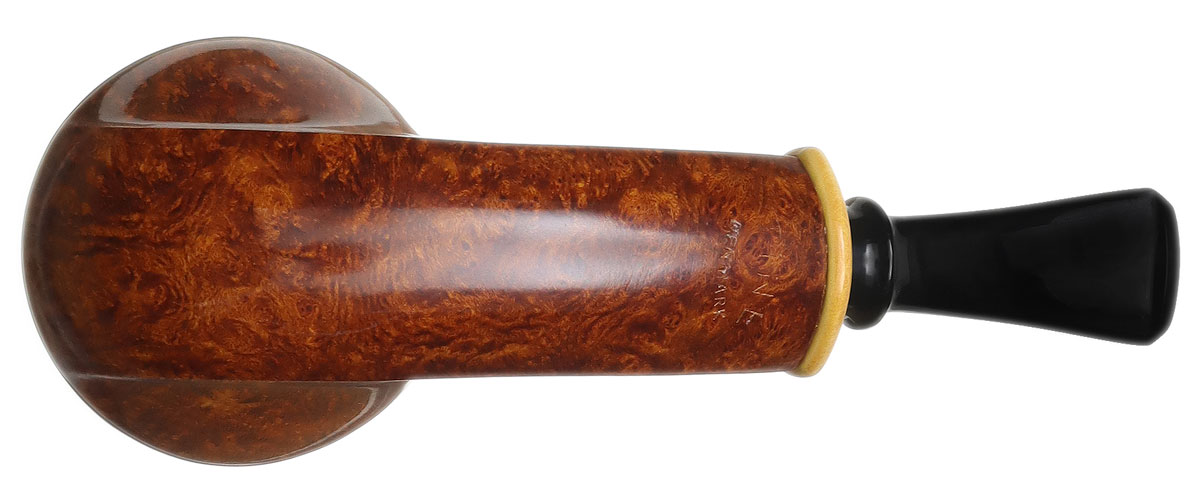
Immediately reminiscent of her father's bent Bulldog renditions, this pipe showcases the unique way which the Ballebys have come to define their Bulldog and Rhodesian shapes, as both are marked by diamond shanks. In Bulldogs, such as this one, the bowl's iconic beadlines are oriented near the heel, while the Rhodesian's are set closer to the rim, making for profiles that are delightfully unique in their takes on the timeless shapes. The shank here maintains a slightly less structural outline than we've often seen from the Elder Balleby, showcasing a pair of panels at the flanks, though being possessed of an easy, rounded shape at the top and underside. The tempering of the Bulldog's firmer elements underscores the subtle sinuousness of the shank-and-stem combination, the shank itself curling gently out of a wide transition to meet a trim band of boxwood at the end: the accent marking the junction to a demurely curved saddle stem of black vulcanite. The two ridgelines nearest to the bottom of the shank are remarkable in their consistent curvature, though their most notable contribution to this pipe's shaping is the way they curve upward into the bowl at the fore. This is a stylistic element that's hugely prevalent in her father's work, creating an effect on the bowl that I like to call "cradling," as the ridges' sharpness seems to envelop and gently cradle the more supple bowl: highlighting the soft contours of the bowl while enhancing the rigidity of the silhouette. The bowl sits on a a curving heel, thanks to the shank's lack of a ridge at the underside, and boasts an arcing taper to the rim from its low-set waist, the walls terminating in an easy slope into the chamber. Dressed in a warm, rich, auburn-tinged stain, the stummel here showcases wrapping flame grain through the flanks of the shank and circumference of the bowl, the underside peppered with plentiful birdseye.
-John McElhenySimilar Pipes
Recently Viewed
Cleaners & Cleaning Supplies
8deco Cleaning Brush - Premium Shank Brush
Cleaners & Cleaning Supplies
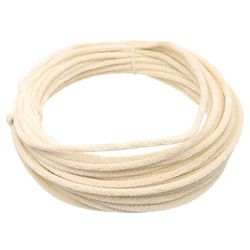
B. J. Long Pipe Cleaners - B Coil 52' Extra Fluffy