

 EN
EN
 JA
JA ZH
ZH





 All New Pipes

















Ask a question about this product.
Measurements & Other Details
- Length: 5.42 in./137.67 mm.
- Weight: 2.24 oz./63.50 g.
- Bowl Height: 1.89 in./48.01 mm.
- Chamber Depth: 1.39 in./35.31 mm.
- Chamber Diameter: 0.75 in./19.05 mm.
- Outside Diameter: 1.69 in./42.93 mm.
- Stem Material: Vulcanite
- Filter: None
- Shape: Blowfish
- Finish: Smooth
- Material: Briar
- Country: Russia
About This Pipe
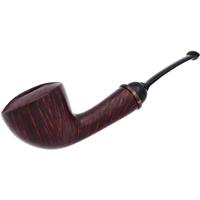
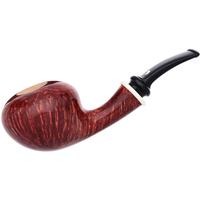
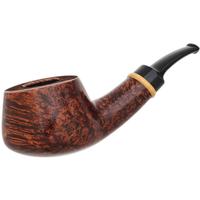
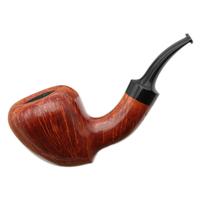
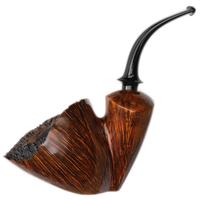
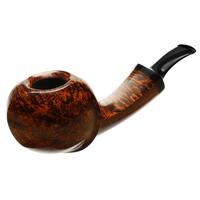
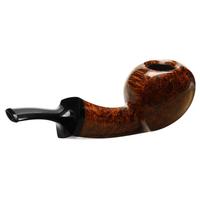
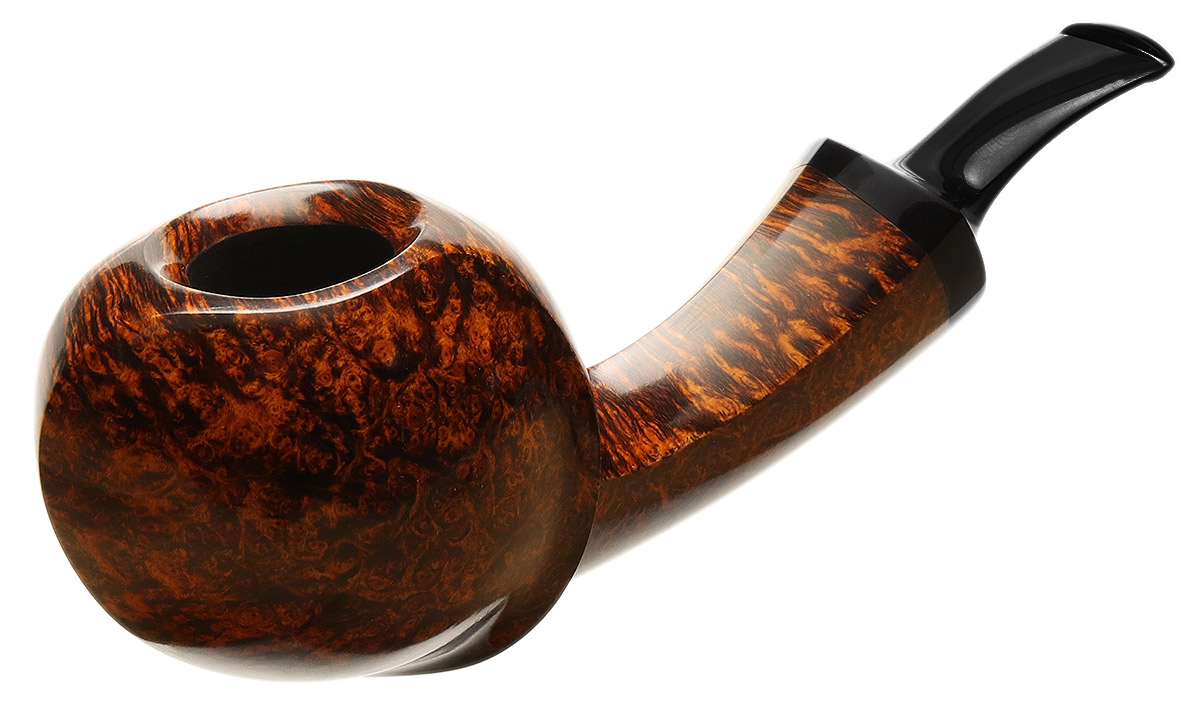
Alexander Tupitsyn is one of the three artisans who comprise the PS Studio workshop in Russia, working alongside Sergey Dyomin and master maker Vladimir Grechukhin, as well as carving handmade pipes under his own name. It is here that Tupitsyn cut his teeth in the pipe world, crafting high quality artisanal pieces at reasonable price points, all under the tutelage of Grechukhin, one of the masters of the St. Petersburg school of pipe making. Later in his career, Tupitsyn received teaching from Poul Ilsted, who taught him the finer points of finishing and facet-work, and fed into his design style of bold profiles imbued with Danish styling. This Blowfish is only the second example of the shape we have seen from Tupitsyn, and this is, undoubtedly, my favorite of the two, as it both hews closest to the lines of the shape's origins while also incorporating elements that are distinctly Alexander's.
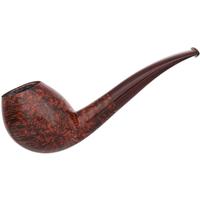
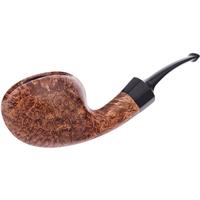
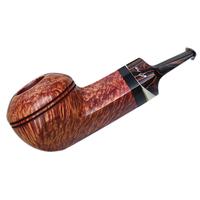
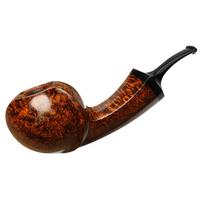
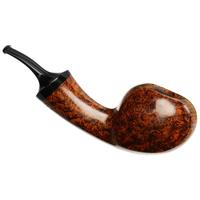
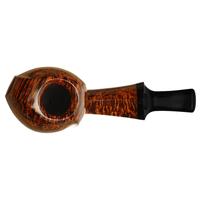
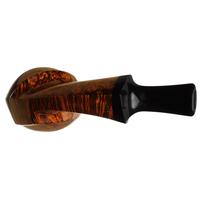
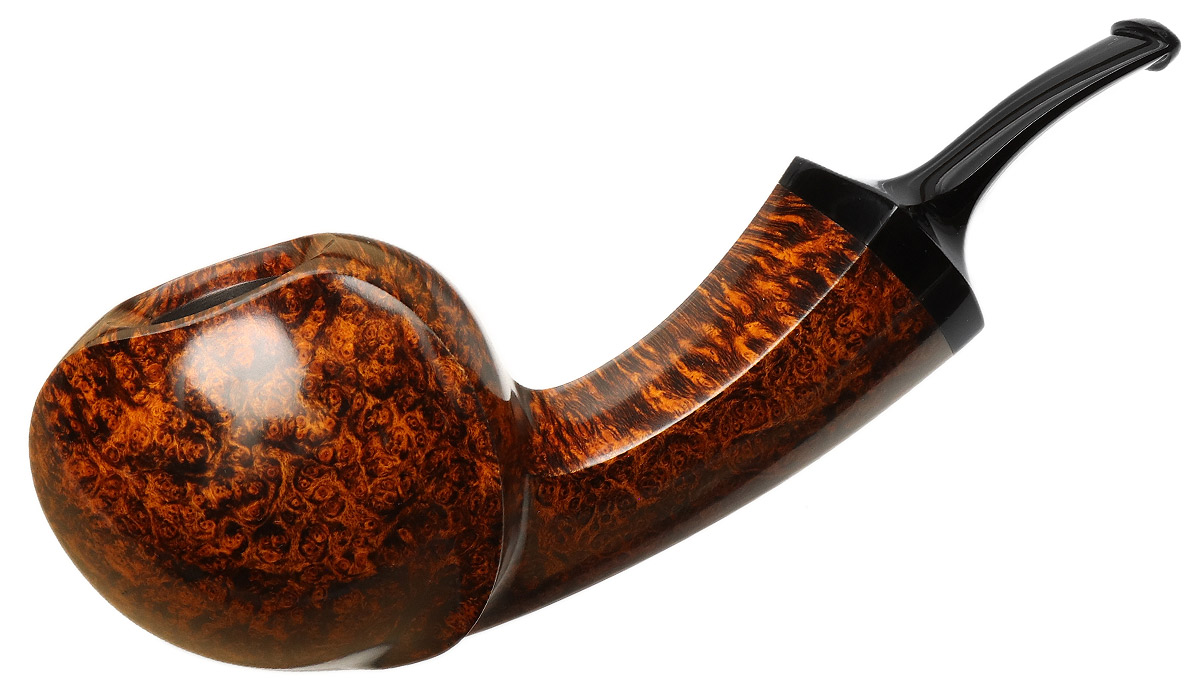
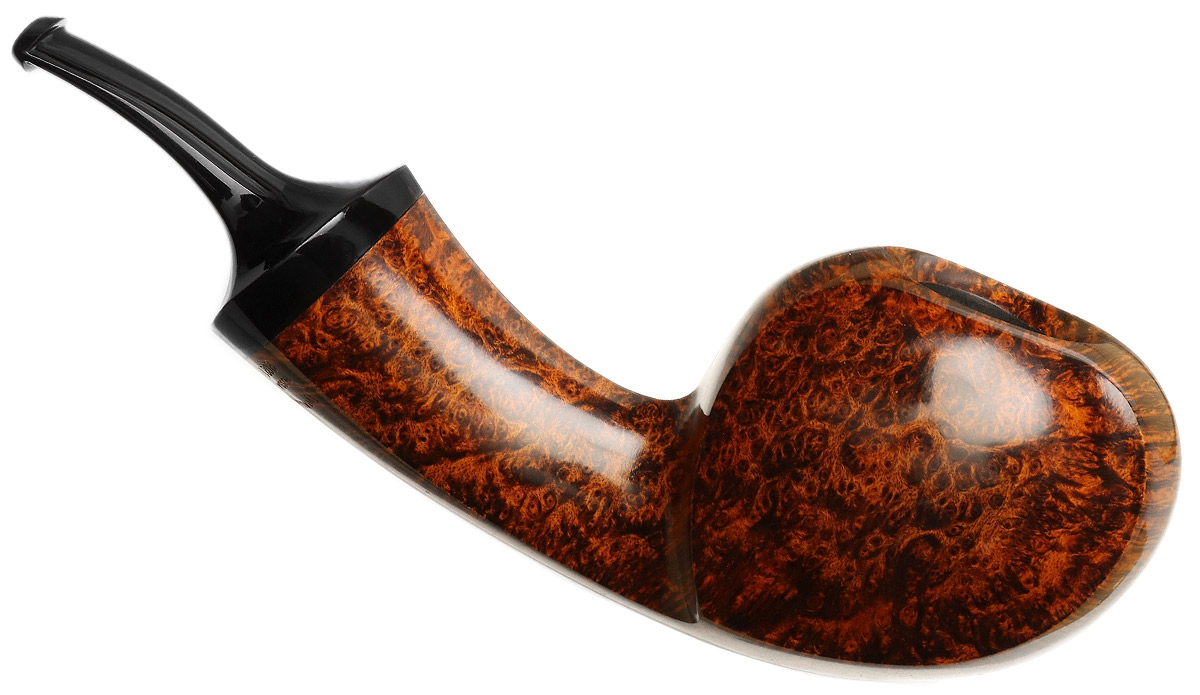
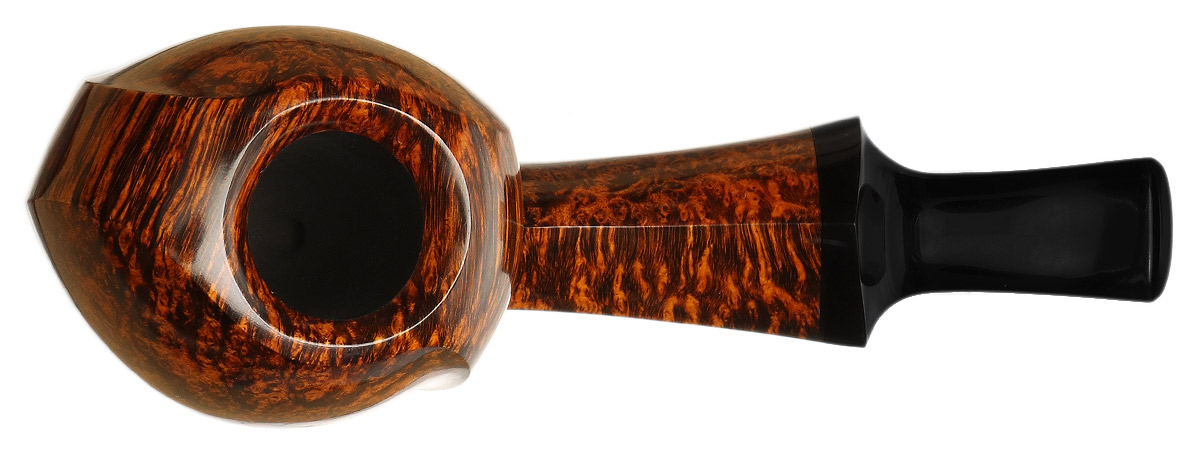
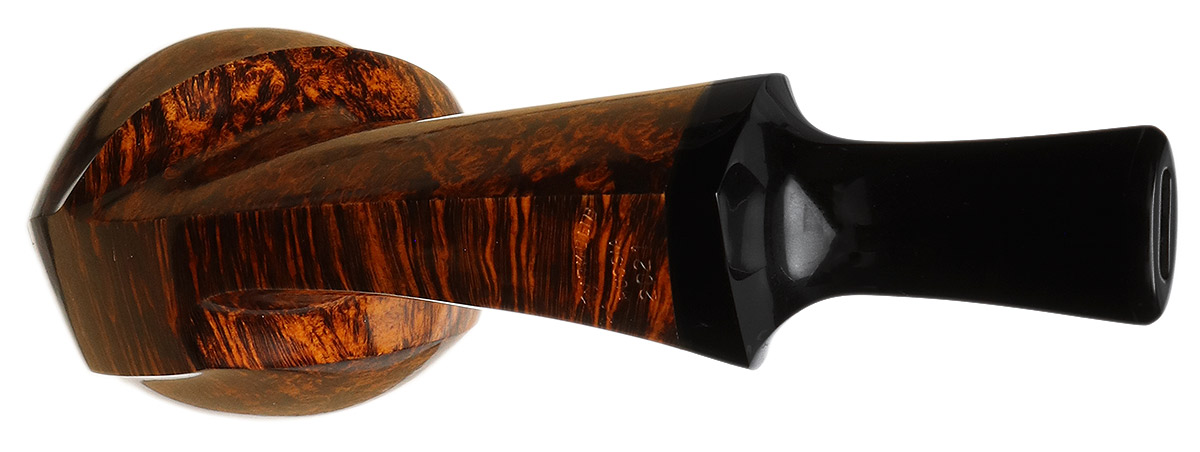
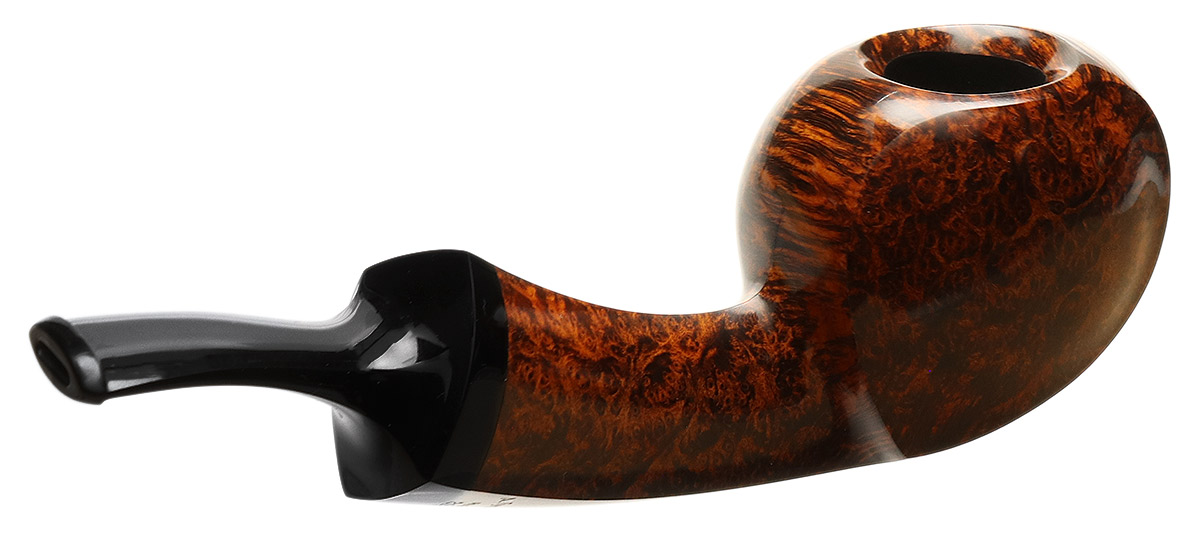
In the pipe world, we talk a lot about implied movement, usually alongside implied momentum, though in this case the movement sits upon a shared throne with the concept of asymmetry. When I say this I don't just mean visual asymmetry, I also mean implied asymmetry, something I never would have thought possible or relevant in a pipe, though, here I am, as this piece somehow manages it. To achieve this, there must also be visual and structural asymmetry, something that is present in the shank, as it is possessed by four distinct ridgelines, something that in many other pipes would designate a square or diamond shank, though in this case it is more so a tilted, rounded rectangle. On the right flank it features a more dramatic, sweeping sense of line to the transition, this only afforded to it by the unique shape of the shank itself, and giving the eye the immediate impression that the entire shank curves, though the straight central ridge gives evidence to the contrary.
The underside also features a central ridge which runs from the stem base to the heel, tilting slightly and beginning to wrap around the left flank of the bowl, then meeting itself again on the underside. On the right flank, the aforementioned sweeping curve also forms a panel, though it juts out from the surface of the stummel a touch, coming to a point before forming the opposing side. These two sides are situated in a way that favors the left side, thereby looking to twist the bowl toward the right, working in concert with the shank build to imply a more severe asymmetry in the shank. This affected me so much so that when I looked at this piece from an aerial perspective my brain immediately convinced me that the shank curved left and the bowl right, thereby striking me with the impression of the Blowfish swimming, a beautiful effect I have only seen a handful of times. The reality is that, despite there being asymmetrical elements to this pipe, the central lines, the overall composition is fairly symmetrical. As is traditional for the shape, Tupitsyn has oriented the briar in a cross grain configuration, and expertly at that, as the eponymous horizontal striations run over and around the midsection of the bowl, ride on top of the central ridgeline on top, and wrap upward from the lower right panel of the shank to the heel. The panels of the bowl, the upper right panel, and the lower left panel of the shank however, feature dense, swirling swathes of birdseye, so much so that to look at it is simply mesmerizing, all of this lovely grain presented under a warm auburn contrast stain.
-John McElheny