

 EN
EN
 JA
JA ZH
ZH





 All New Pipes




















Ask a question about this product.
Measurements & Other Details
- Length: 6.80 in./172.72 mm.
- Weight: 2.00 oz./56.70 g.
- Bowl Height: 1.66 in./42.16 mm.
- Chamber Depth: 1.48 in./37.59 mm.
- Chamber Diameter: 0.80 in./20.32 mm.
- Outside Diameter: 1.51 in./38.35 mm.
- Stem Material: Vulcanite
- Filter: None
- Shape: Blowfish
- Finish: Smooth
- Material: Briar
- Country: Indonesia
About This Pipe
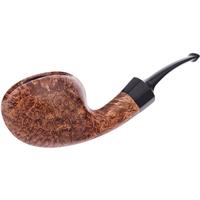
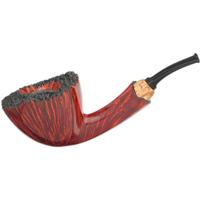
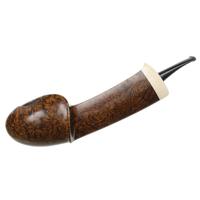
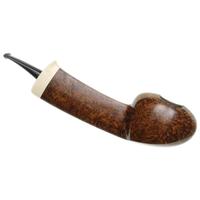
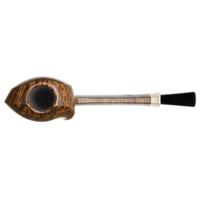
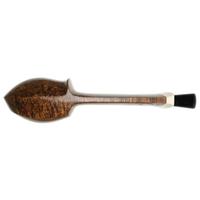
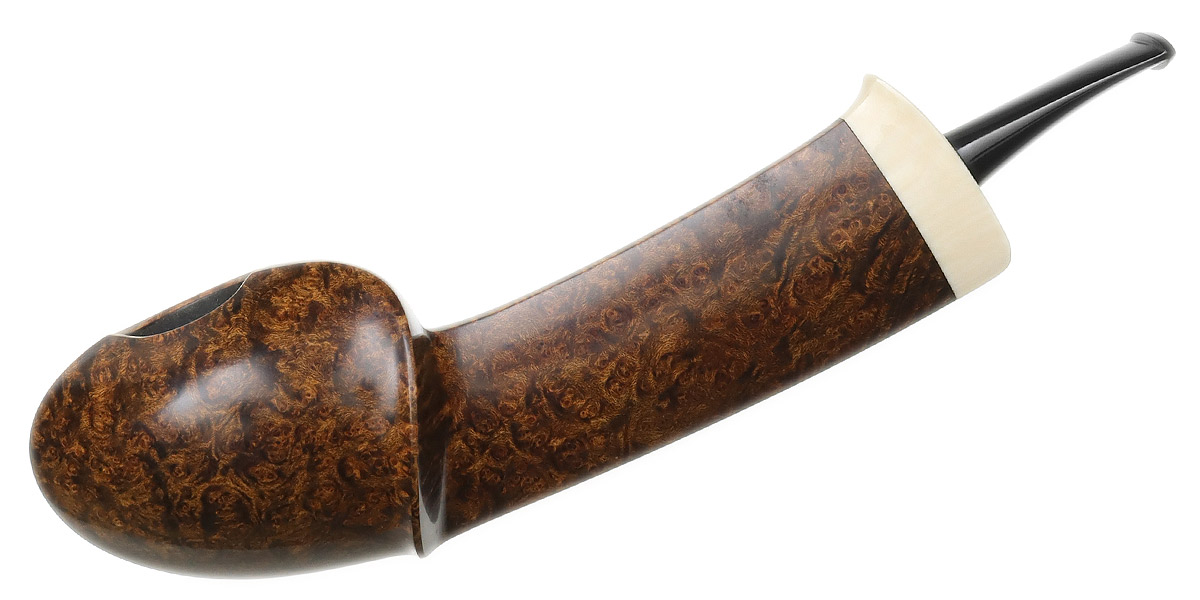
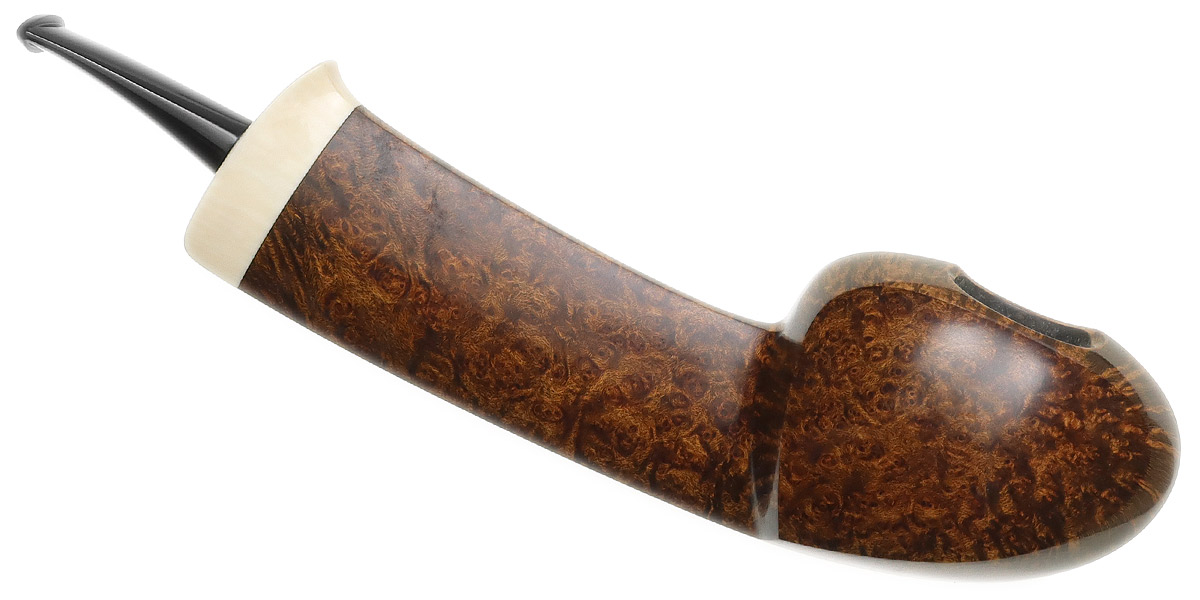
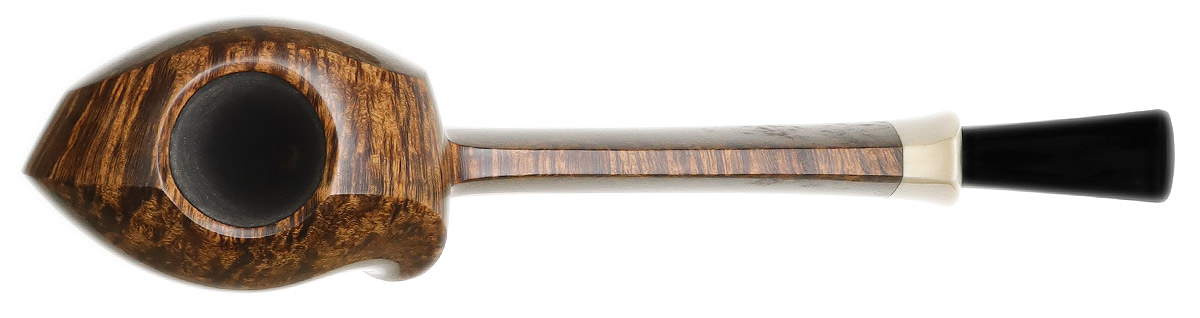
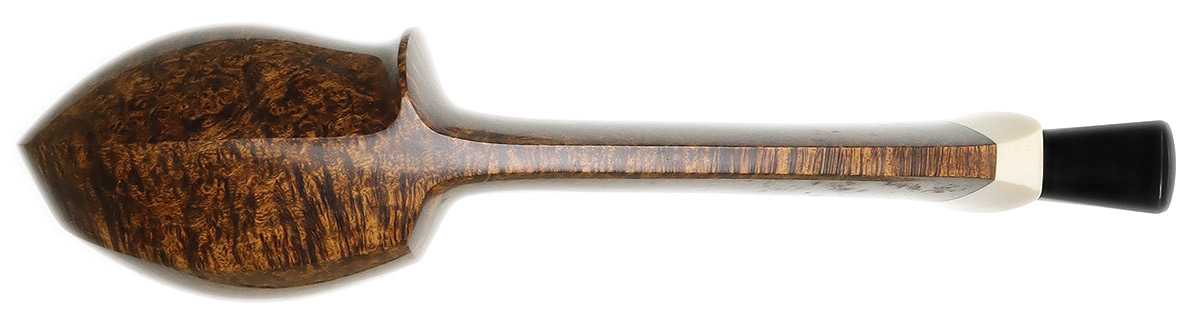
Hailing from Tasikmalaya, West Java, Indonesia, Wandi Riyadi is one of few artisans from the nation, inspired by the artistry of handmade pipes from carvers such as Bo Nordh, Hiroyuki Tokutomi, and Sixten Ivarsson. As such, Riyadi's work boasts an impressively Danish and Japanese-influenced style that values complex, organic detail, sophisticated structure, and rich curves. Riyadi's Blowfish renditions are all unique takes on the contemporary classic silhouette, taking the form of either tightly-knit, bowl-forward compositions, or long-shanked examples such as this one. While many Blowfish feature long, faceted shanks, Riyadi's signature interpretations compress the shank significantly and showcase a remarkable thinness from the smoker's perspective. In profile, however, the shank is impressively tall, cultivating a protracted, paddle-like look that reaches out and extends the reach of this pipe to nearly seven inches long. The entirety of this reach is lined with crisp ridgelines at the top and underside, where they frame slim panels that are gently canted at opposing angles, while the flanks of the shank display a more rounded appearance. The shank is paired to a sleek, short, tapering stem of black vulcanite, accented with a tall, thick band of pale Ivorite. This band of Ivorite continues a minute upturn present at the top line of the shank, creating a dynamic little curl that further enhances the intrigue of the aft side.
The transition is wide, and the structure of the bowl surrounding it showcases the Blowfish shape's iconic style of fin-like outcropping at the left flank, while the right side features an easier, more rounded kind of geometry. This arrangement creates a uniquely symmetrical underside at the transition, where the walls of the bowl expand out with nearly the same trajectory to form disparate halves of a sophisticated whole. The fin-like structure on the left manifests out of a ridgeline that surrounds the side of the bowl, where it flows and curls around toward the aft, joining with a second ridge to define an extremely crisp, fine pane of briar before splitting at the underside of the transition. The right flank of the bowl is surrounded by its own ridge structure and boasts its own style of domed panel, though one that's slightly less pronounced and that pinches into a point near the lower aft. The middle portion of the bowl is sloped toward the right side, enhancing the effect of this pipe's powerful asymmetry, and the rim is chamfered, matching the facets surrounding it. Dressed in a warm, rich contrast stain, the stummel boasts vast oceans of birdseye across both flanks, with the shank acting as a huge canvas for the swirling grain patterns while the Ivorite accent offers ample contrast.
-John McElheny