

 EN
EN
 JA
JA ZH
ZH





 All New Pipes
















Ask a question about this product.
Measurements & Other Details
- Length: 7.73 in./196.34 mm.
- Weight: 2.88 oz./81.65 g.
- Bowl Height: 2.01 in./51.05 mm.
- Chamber Depth: 1.75 in./44.45 mm.
- Chamber Diameter: 0.74 in./18.80 mm.
- Outside Diameter: 1.64 in./41.66 mm.
- Stem Material: Vulcanite
- Filter: None
- Shape: Panel
- Finish: Smooth
- Material: Briar
- Country: United States
About This Pipe
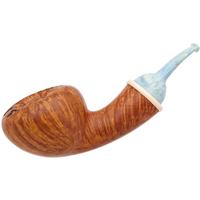
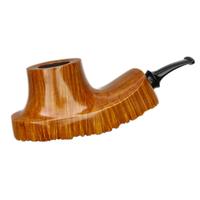
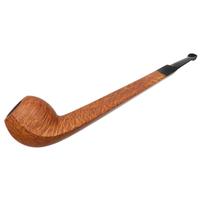
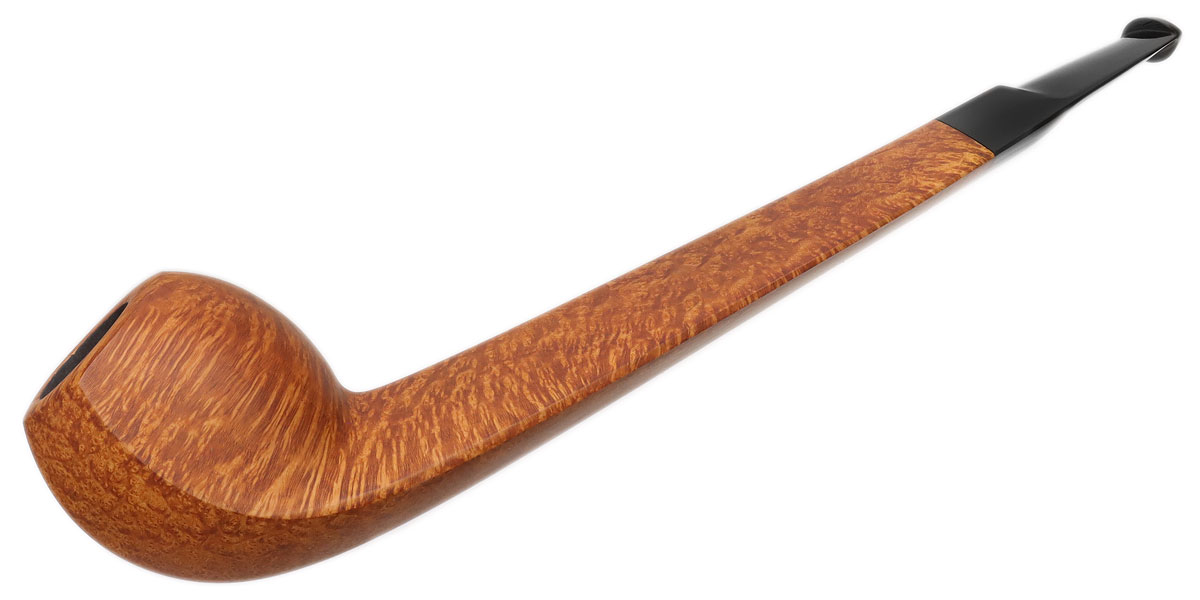
Few artisans have had a greater impact on the pipe making world than Todd Johnson. He was among the first American artisans to seek out the Danes and learn their method of pipe making, and he's since passed that knowledge on to many younger carvers throughout his career. That said, while Johnson has championed the engineering and techniques of Danish artisan pipe making, he's developed a style all his own — one that often results in gorgeous, organic forms that seem more to have grown from nature rather than having been shaped on a sanding disc. While some makers conform the briar to a predetermined form, Johnson considers himself a slave to the briar's natural whimsy, seeking to reveal what shape it wishes to be.
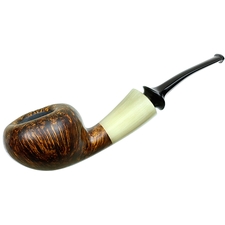
To understand Johnson's signature Sarcophagus shape, one must first be familiar with Sixten Ivarsson's Ukulele and Tom Eltang's Eskimo shapes. Decades ago, Ivarsson developed a design that resembled a ukulele when viewed from an aerial perspective: It featured a squat, rounded bowl and a broad, oval shank and saddle stem, and has been immortalized as Stanwell's "91" design. In subsequent years, Tom Eltang riffed on the Ukulele to create his signature Eskimo shape. In his design, Eltang exaggerates the shank breadth as it flares from the stem to match the bowl's width, and the Eskimo most often features a squat Bulldog-like bowl. Johnson adds yet another interpretation to this lineage, reinterpreting Eltang's Eskimo to create his own distinctive version.
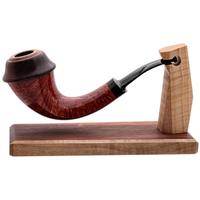
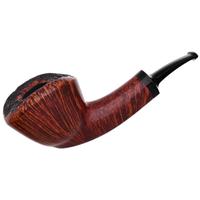
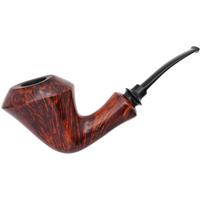
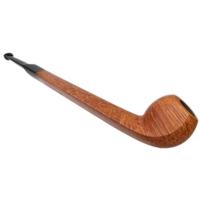
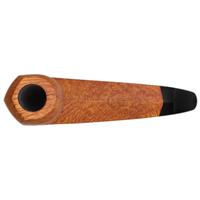
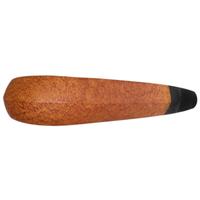
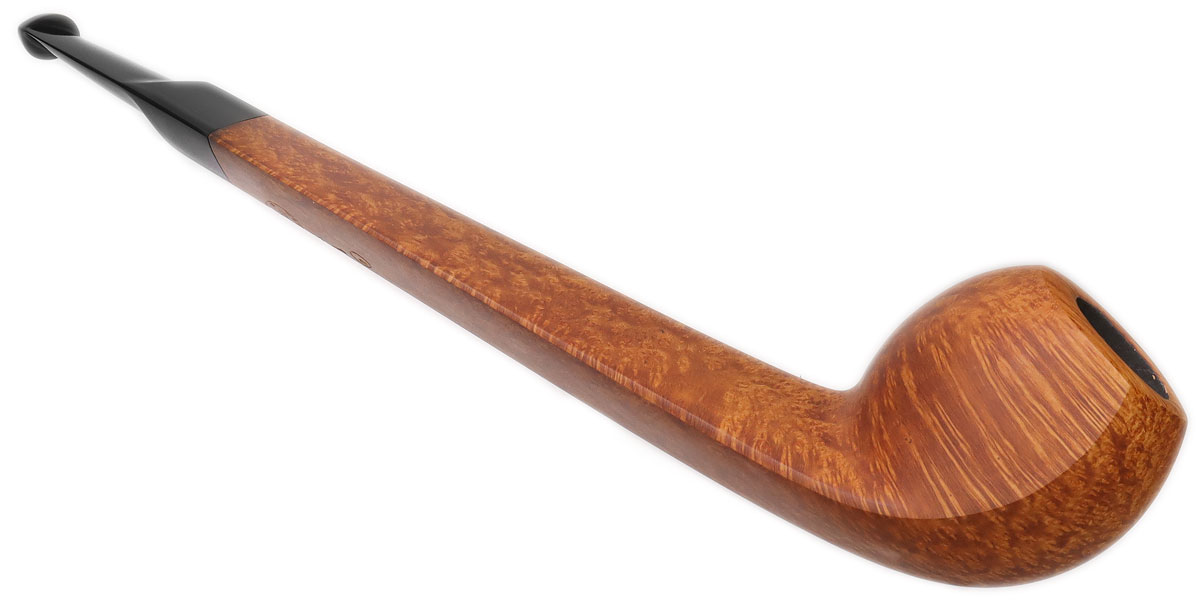
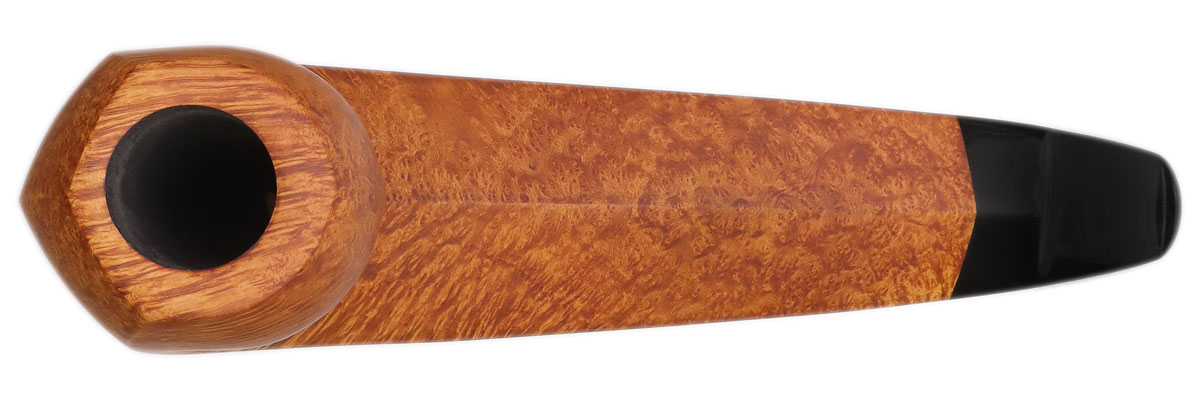
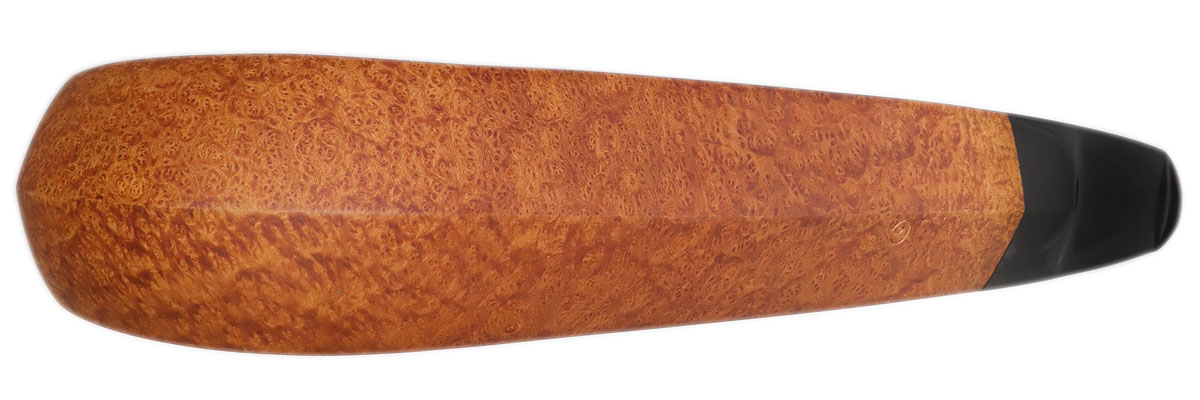
Like the Eskimo, the Sarcophagus relies on a broad shank, but Johnson maintains this breadth through the stem, the shank's rounded demeanor evoking the shape's namesake with viewed from above or below. Ridgelines typically define the shank's sides, and these lines curl through the transition and into the bowl. It's at the transition especially that the Sarcophagus departs from the Esikimo, revealing a more gradual and curved delineation between bowl and shank. This particular example from Johnson is among his most impressive: The broad, defining shank is not only elongated considerably, but it's been paneled to a diamond cross-section, with the flanking ridgelines actually rendered into the slightest of panels. These side panels dissipate into single ridges at the transition before curling up the bowl to the rim and defining the fore's two panels, separating birdseye from cross grain in a beautiful symbiosis of craftsmanship and artistry. Bold and imposing, yet intricate and refined, this is a sculptural feat from Johnson, and he's let the briar speak for itself — dressed in a matte stain free of adorning accent — and commended it with his highest grade of Phalanx Q.
-Truett Smith