

 EN
EN
 JA
JA ZH
ZH





 All New Pipes





















Ask a question about this product.
Measurements & Other Details
- Length: 6.52 in./165.61 mm.
- Weight: 7.10 oz./201.28 g.
- Bowl Height: 1.83 in./46.48 mm.
- Chamber Depth: 1.21 in./30.73 mm.
- Chamber Diameter: 0.80 in./20.32 mm.
- Outside Diameter: 3.52 in./89.41 mm.
- Stem Material: Vulcanite
- Filter: None
- Shape: Freehand
- Finish: Smooth
- Material: Briar
- Country: Japan
About This Pipe
Kei-ichi Gotoh is considered by many to be the best artisan in Japan, with an impeccable, unflinching eye for detail and highly unique shaping style that's reflected in his extremely low annual production rate. His story begins like that of many artisans, having received a pipe kit from a friend as a gift, however this kit's journey to completion was by no means a standard one, as Gotoh spent four months finishing it from beginning to end. This highly methodical carving process would come to typify his work as an artisan, and the results that it offered saw him transition from working as an amateur carver to making pipes for Tsuge's prestigious Ikebana line in 1981. After working for Tsuge for six years, he moved on to the industrial design sector while carving pipes on the side, though returned to the craft in a fuller capacity around 2004, with the added benefit of tutelage by master artisan Hiroyuki Tokutomi. Gotoh himself has become a master in his own right, with a powerful command over asymmetry and lively organicism that has resulted in a portfolio which is nothing short of stunning, and that's inspired untold ranks of carvers who admire his work.
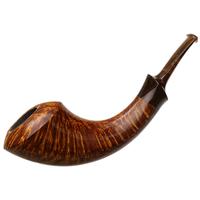
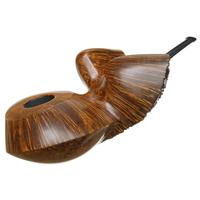
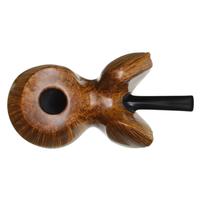
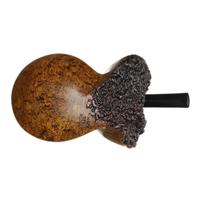
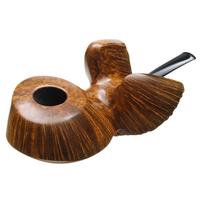
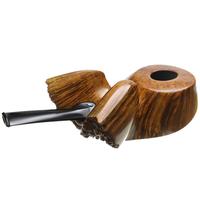
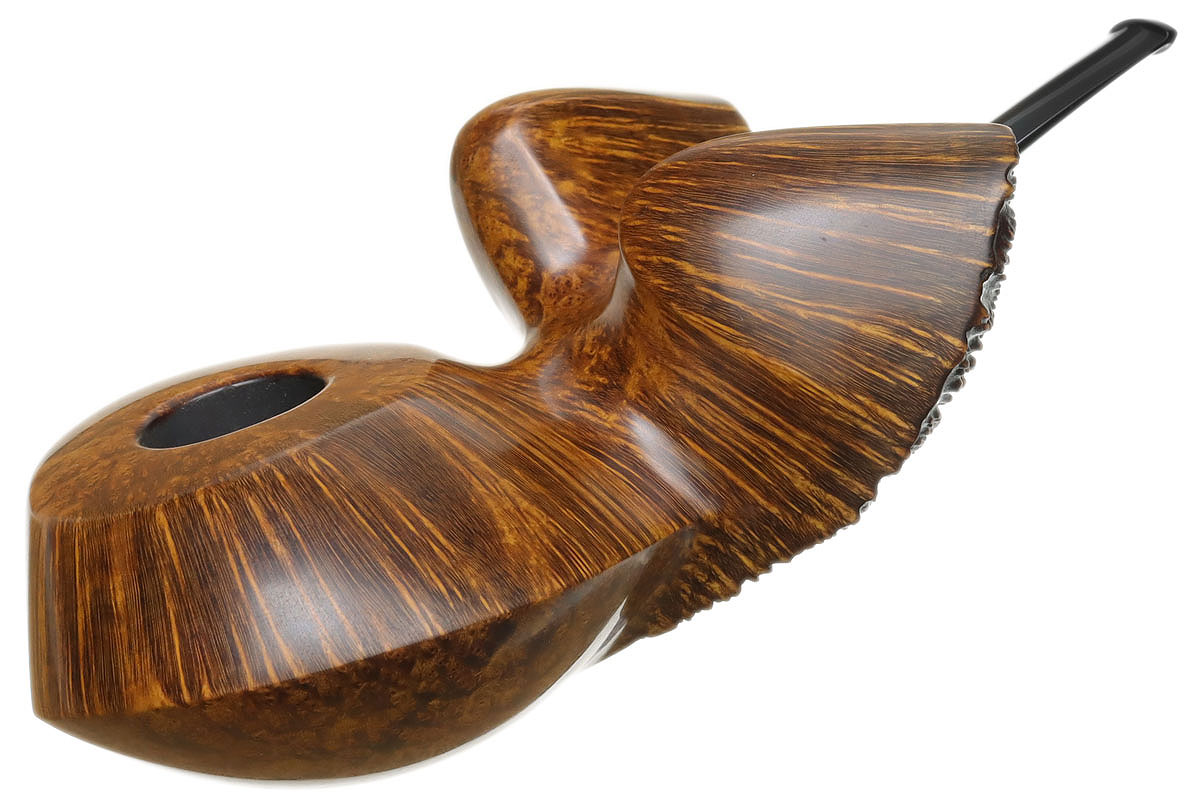
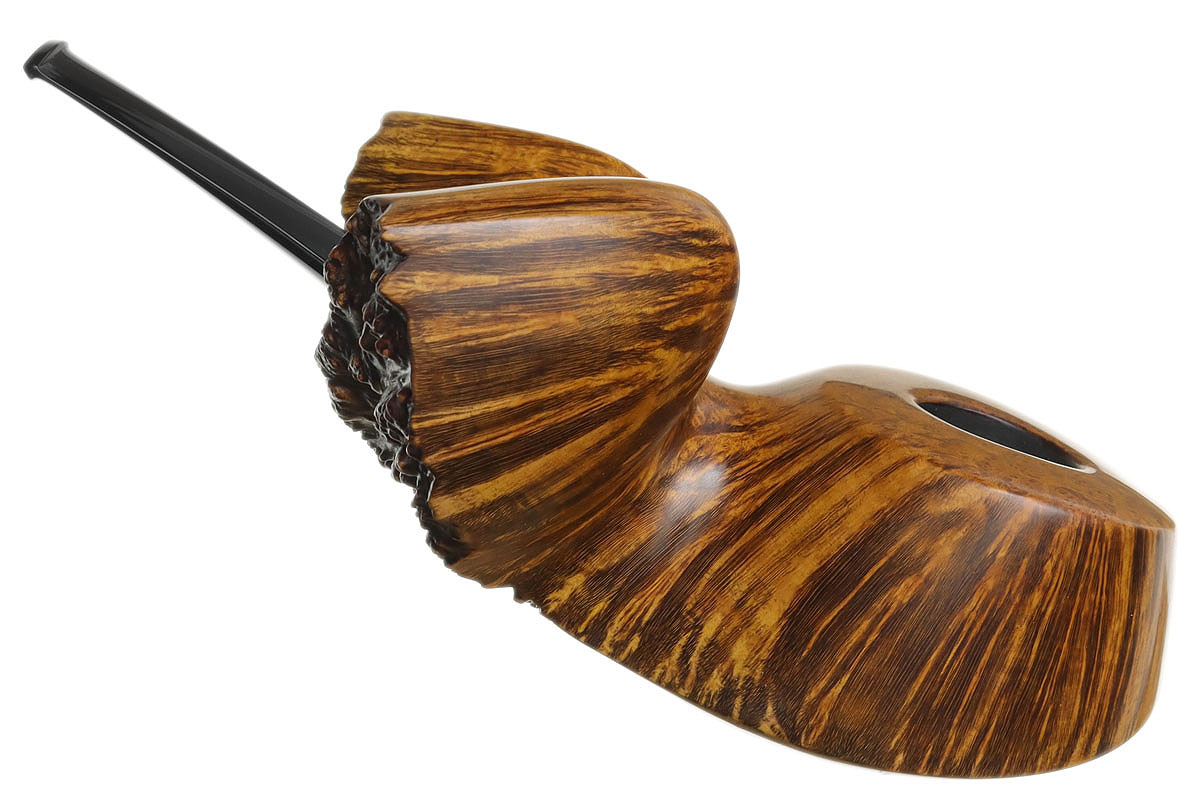
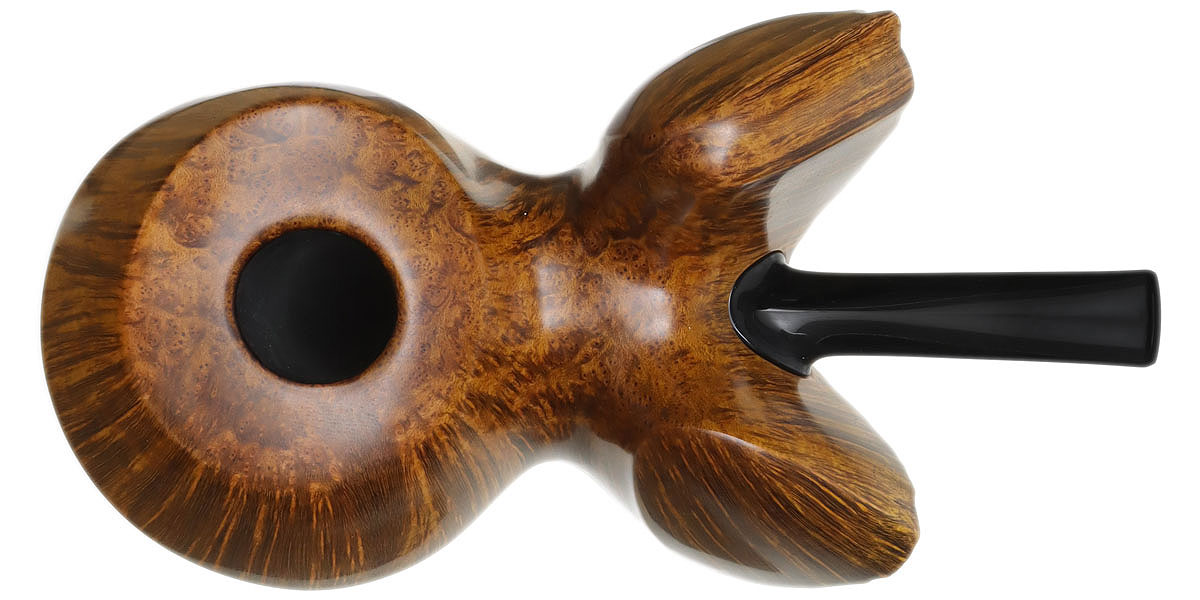
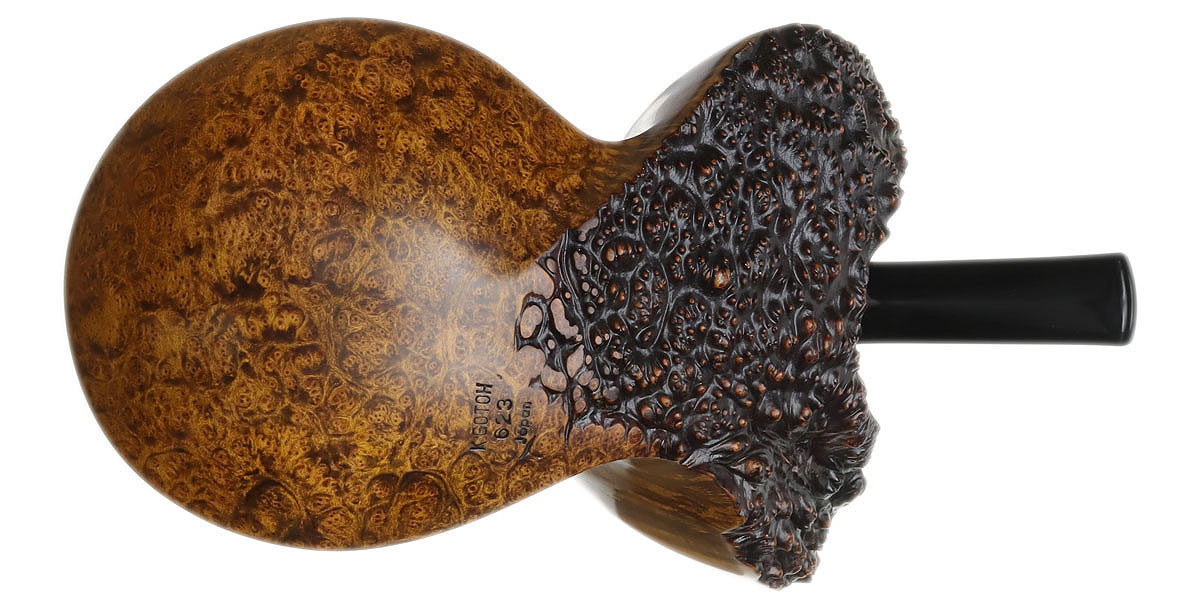
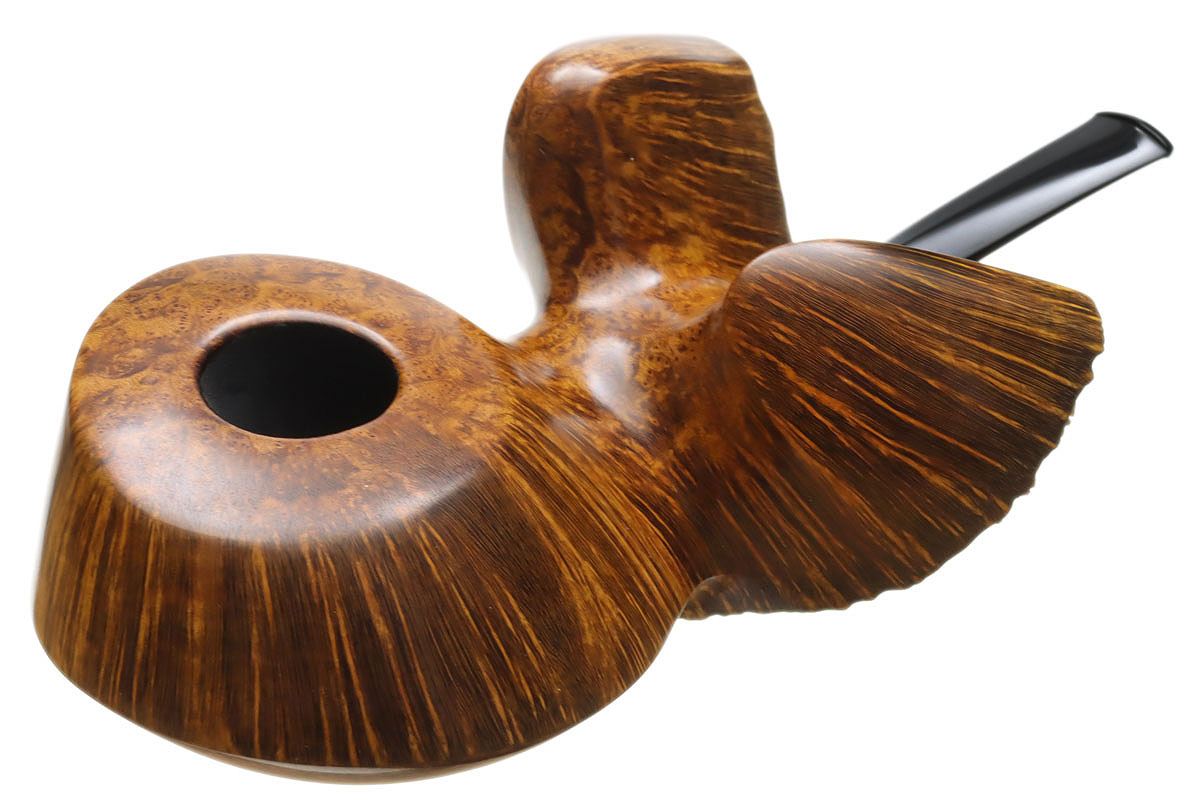
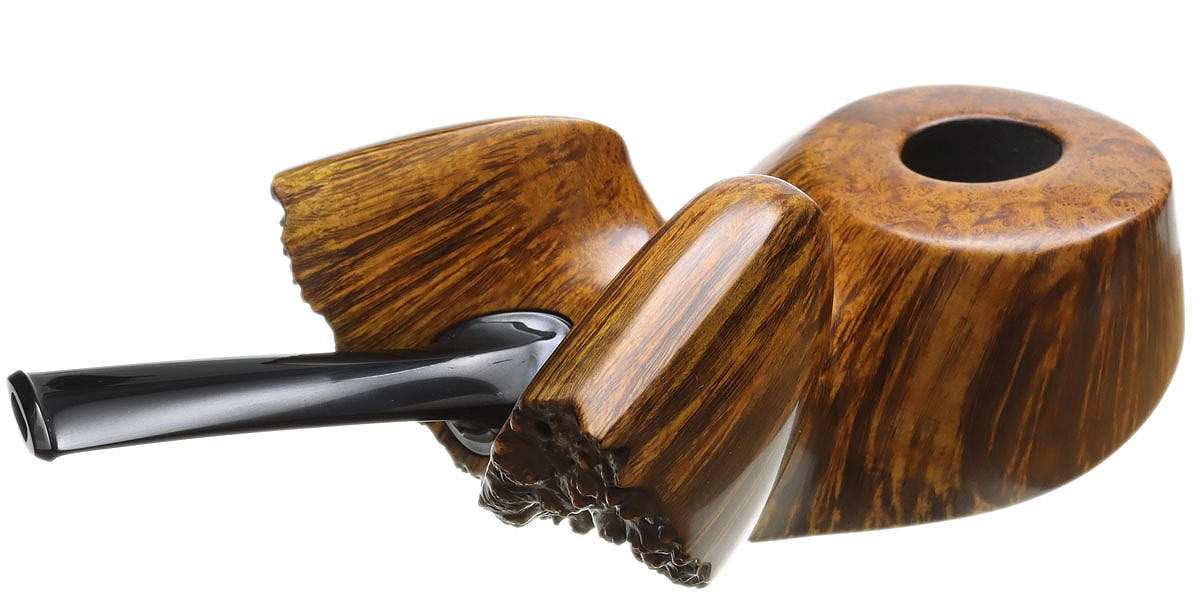
Gotoh's organic leanings are on full display in this Freehand piece, one which the artisan has dubbed the Ryūjin, translating literally from Japanese as "Dragon God." The Ryūjin features prominently in Japanese mythology as a deity of the sea and is recognized as a patron of the island nation wholly or partially responsible for the hurricane that sank the invading Mongol flotilla sent by Kublai Khan in the late 13th century. Representing this ancient protector of the sea, Gotoh presents us with a stunningly dynamic pipe that blurs the line between pipe and art, a wholly sculptural offering befitting his status as one of Japan's finest pipe makers. What leaps out at me first in this composition is the shank, having here been split and extending past the stem's nestling into the middle. Either side takes on a lifting expansion out to a subtly paneled face, lined by a pair of understated ridgelines and embodying a look immediately reminiscent of spread wings. Inspired to craft "an object that not only has wings but also a whole body that flies around," Gotoh's creation here achieves that goal in its effortlessly active silhouette, belying the strikingly large footprint and impressive weight of its construction. The way in which the shank's briar "wings" showcase firmness in concert with the supple flow of the briar around these firm sections brings to mind the way skin or feathers drape over bone: A vast basin of plateau covers the underside of the shank as well, furthering this illusion by way of its dense peaks and rugged texture. Up front, the bowl sits atop a pronounced heel that pushes out from a wrapping baseline marked with a ridge, its walls taking on a Volcano-like taper to the asymmetrical rim. Pronounced asymmetry through both the bowl and shank combine to create an active and lively profile which underscores the deeply organic contours of the pipe, imbuing the briar with a vitality that's simply awe-inspiring. Dressed in one of Gotoh's light contrast stains, the entirety of the stummel is wrapped by an unbroken band of tightly-packed flame grain, framed on both the top and underside by an ocean of bountiful birdseye.
-John McElheny