

 EN
EN
 JA
JA ZH
ZH





 All New Pipes






Ask a question about this product.
Measurements & Other Details
- Length: 5.97 in./151.64 mm.
- Weight: 1.20 oz./34.02 g.
- Bowl Height: 2.04 in./51.82 mm.
- Chamber Depth: 1.67 in./42.42 mm.
- Chamber Diameter: 0.72 in./18.29 mm.
- Outside Diameter: 1.50 in./38.10 mm.
- Stem Material: Vulcanite
- Filter: None
- Shape: Cutty
- Finish: Carved
- Material: Briar
- Country: Greece
About This Pipe
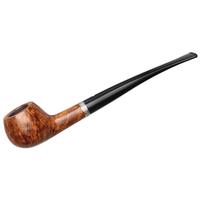
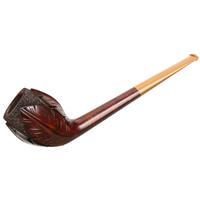
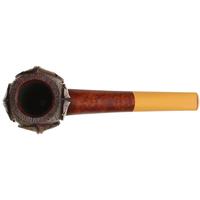
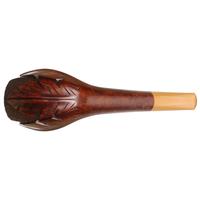
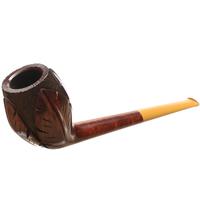
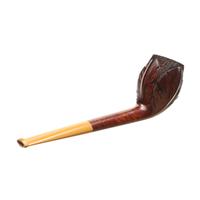
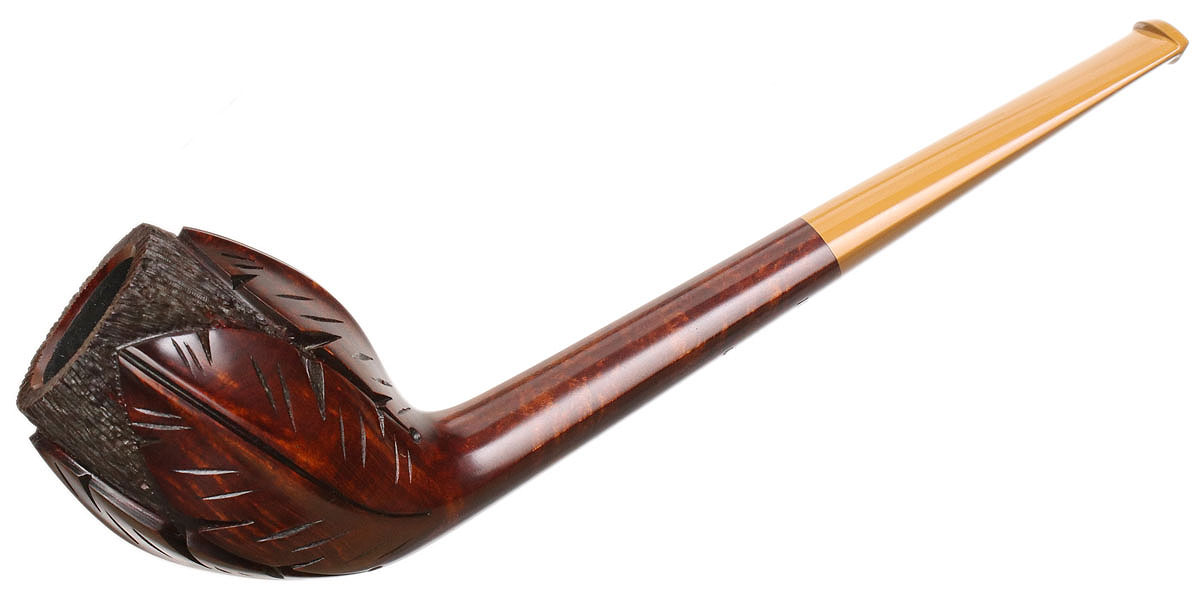
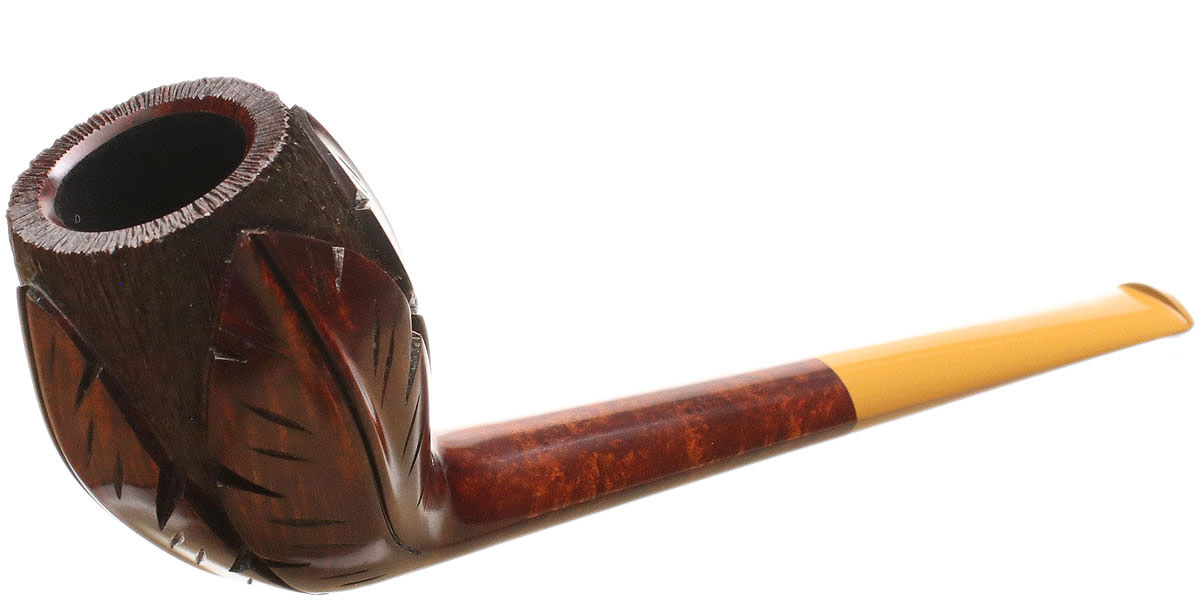
A student of both industrial design and architecture, Chris Asteriou worked as both from 2000 to 2014, this over a decade of experience contributing to his pipe carving, something that has since become his full time career. When one sees his work, this is no surprise, as he is able to seamlessly interweave different styles into his portfolio, something evidenced extremely well by this Cutty, a shape with roots that stretch back to the clay tavern pipes of old, making it centuries old. This particular iteration was inspired by a 1950s French interpretation of the shape and showcases a feature we've never seen before in an Asteriou pipe.
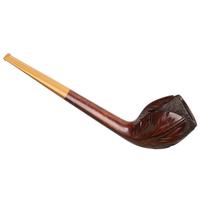
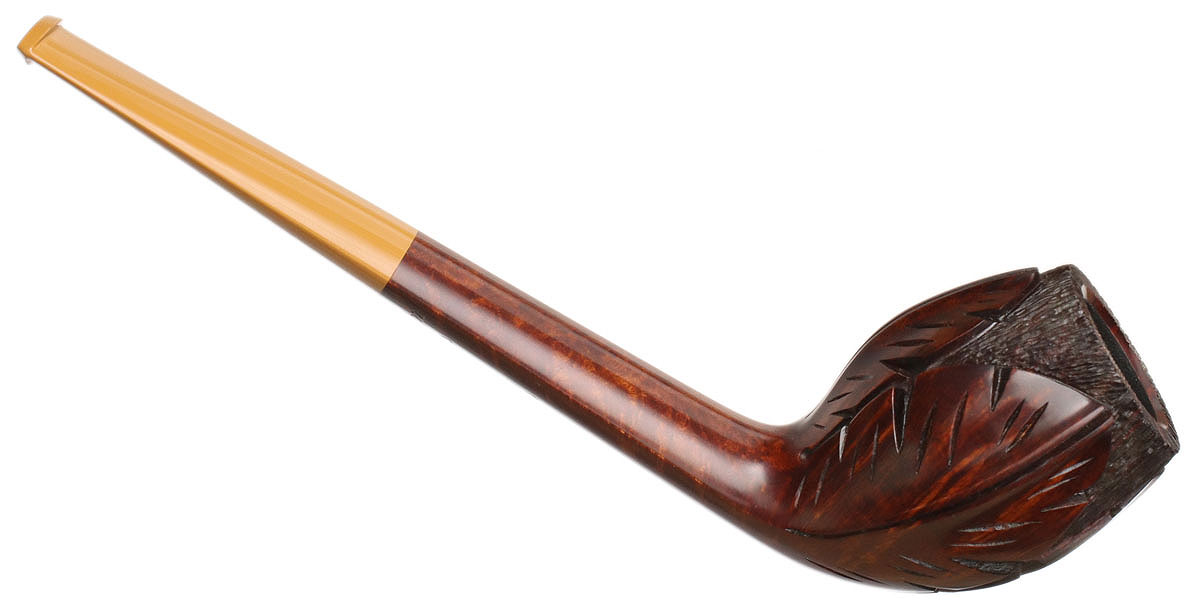
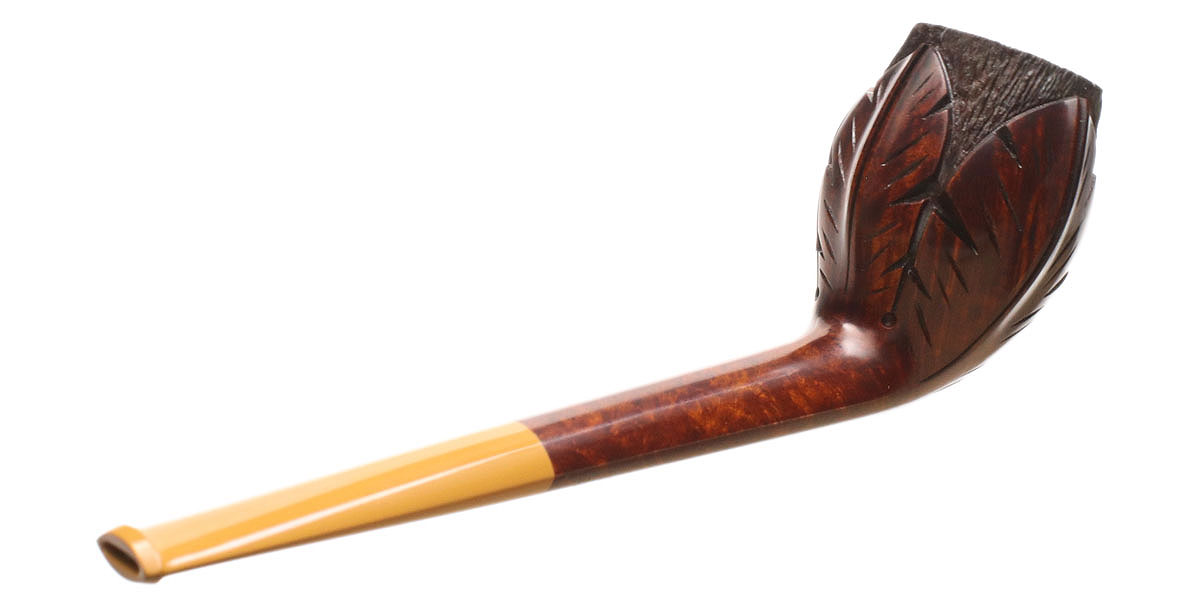
I speak of course about the fact that this pipe is carved, something that's extremely surprising in its own right from the Greek artisan, but what makes this piece all the more enchanting is that Chris has bestowed it with his highest grade: Narcissus. Asteriou's line work is impeccable here, with a sleek taper of shank and stem that starts at the transition and remains steady throughout, working not only to emphasize the bowl and sleeken the aft side of the pipe, but to create a natural path for the eyes to follow forward. Up front, the bowl itself is what one would expect from a classic Cutty, save for its carved surfaces, and it takes on a handsome forward cant, imbuing the fore of this piece with plenty of dynamic momentum which still feels rather gentle.
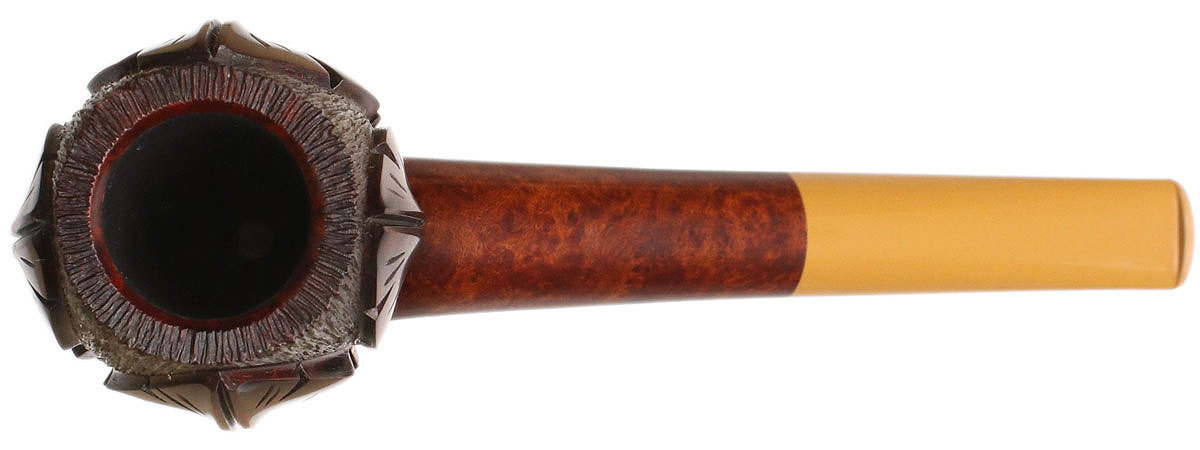
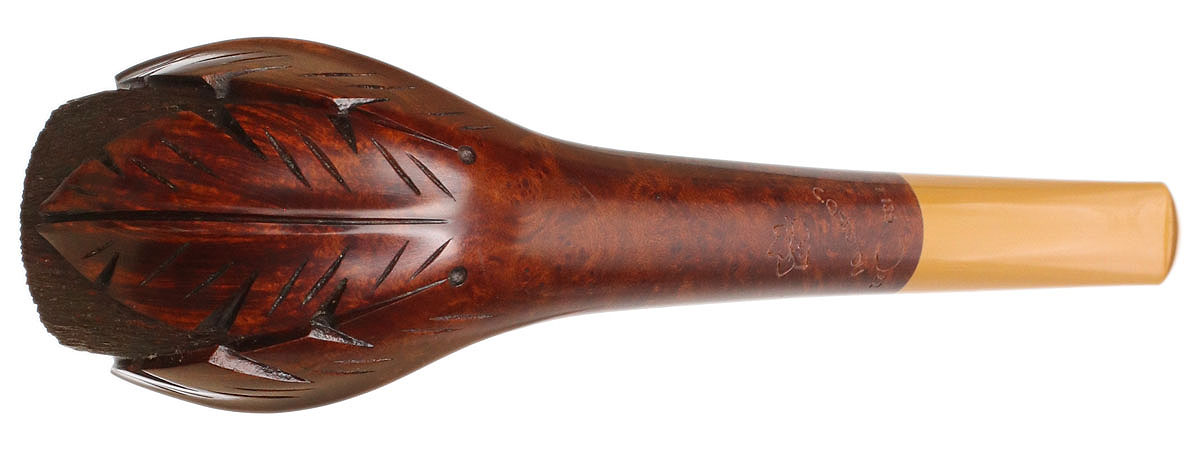
My favorite aspect of this pipe are the twin ridgelines that run the length of the piece from the bit to the bowl, starting at the flanks of the soft amber-yellow, vulcanite stem and following the lines of the briar exactly. These then interact with the carved bowl, which presents as a quartet of wide leaves surrounding a striated texture, by meeting the central line of both leaves at the flanks. Said lines are slightly curved near the transition to meet the similarly curved ridges, and it is then that the pair becomes one, raising the surface of the texture and continuing both lines as perfectly as possible before meeting the apex of the leaf in a spectacular show of Asteriou's eye for detail. The smooth surfaces of the stummel are dressed in a vibrant auburn stain that reveals tight striations of flame grain wrapping the bowl and leaves, while the top and bottom of the shank are peppered with birdseye, the stem's hues providing a soft complementary color.
-John McElhenySimilar Pipes
Recently Viewed