

 EN
EN
 JA
JA ZH
ZH





 All New Pipes




















Ask a question about this product.
Measurements & Other Details
- Length: 7.50 in./190.50 mm.
- Weight: 4.35 oz./123.38 g.
- Bowl Height: 1.98 in./50.29 mm.
- Chamber Depth: 1.44 in./36.58 mm.
- Chamber Diameter: 0.76 in./19.30 mm.
- Outside Diameter: 2.64 in./67.06 mm.
- Stem Material: Vulcanite
- Filter: None
- Shape: Freehand
- Finish: Smooth
- Material: Briar
- Country: United States
About This Pipe
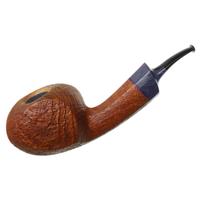
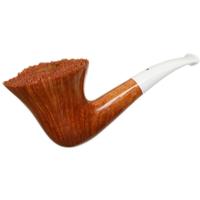
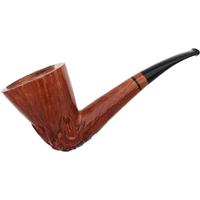
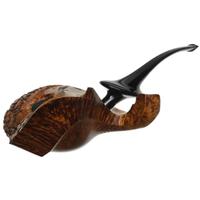
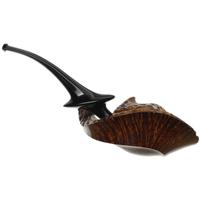
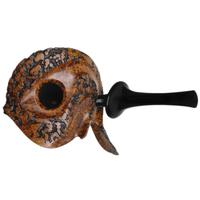
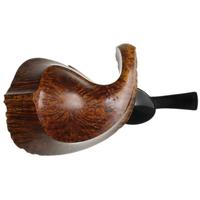
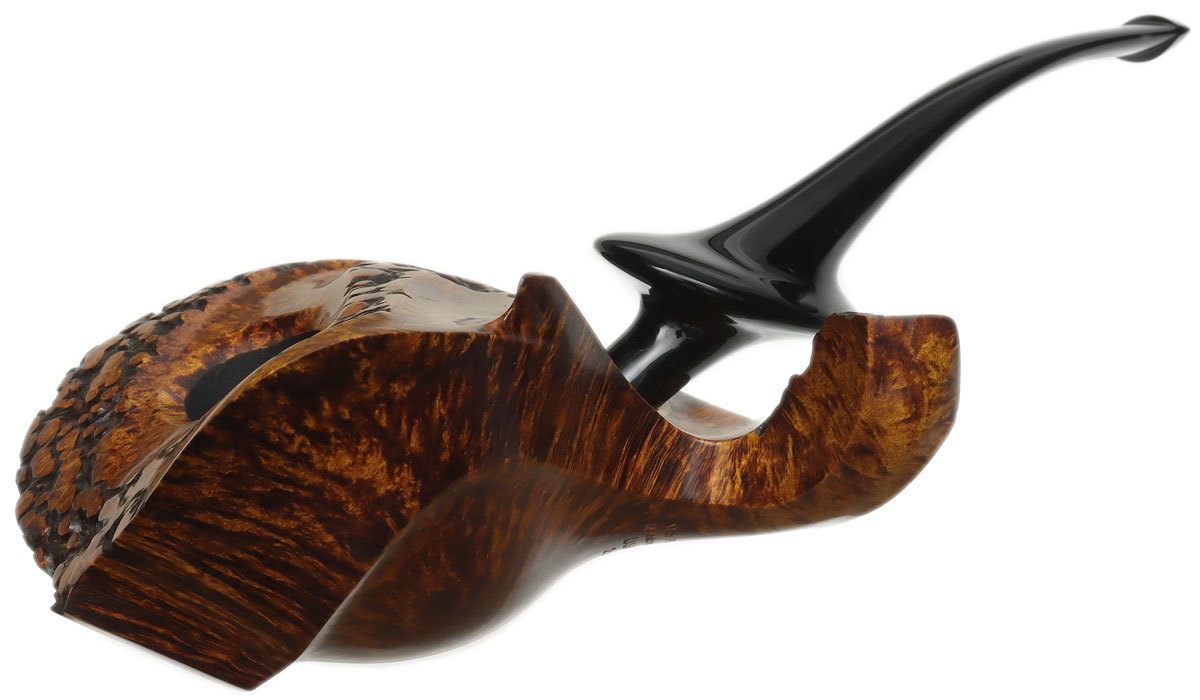
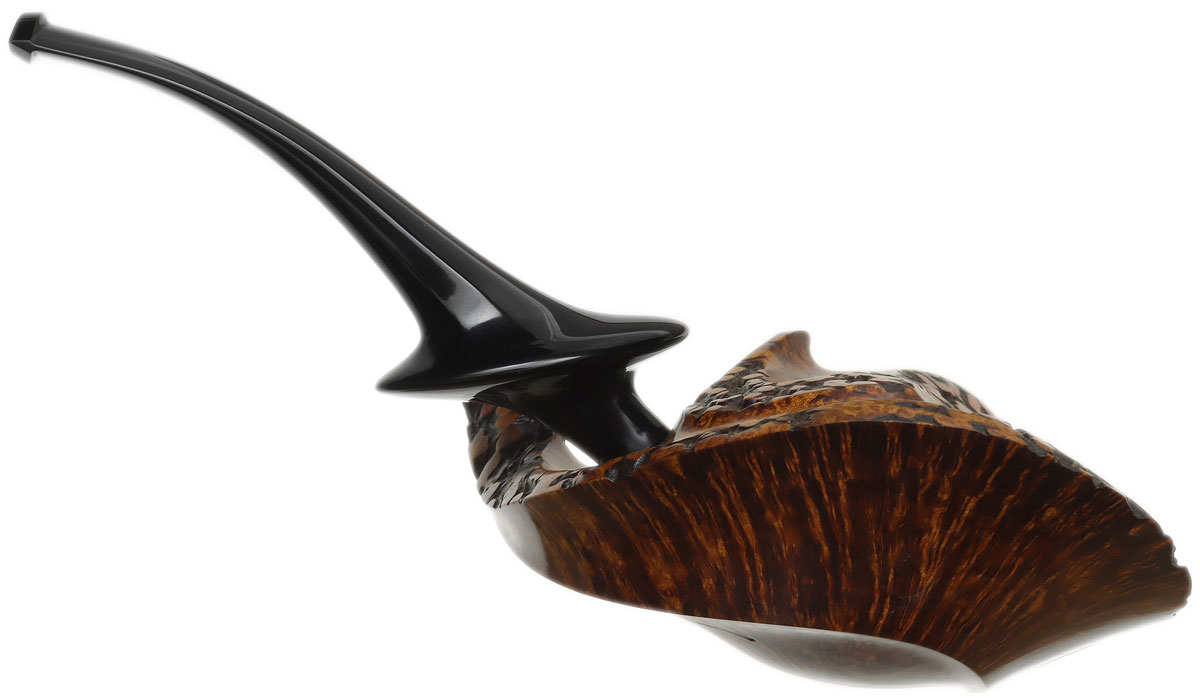
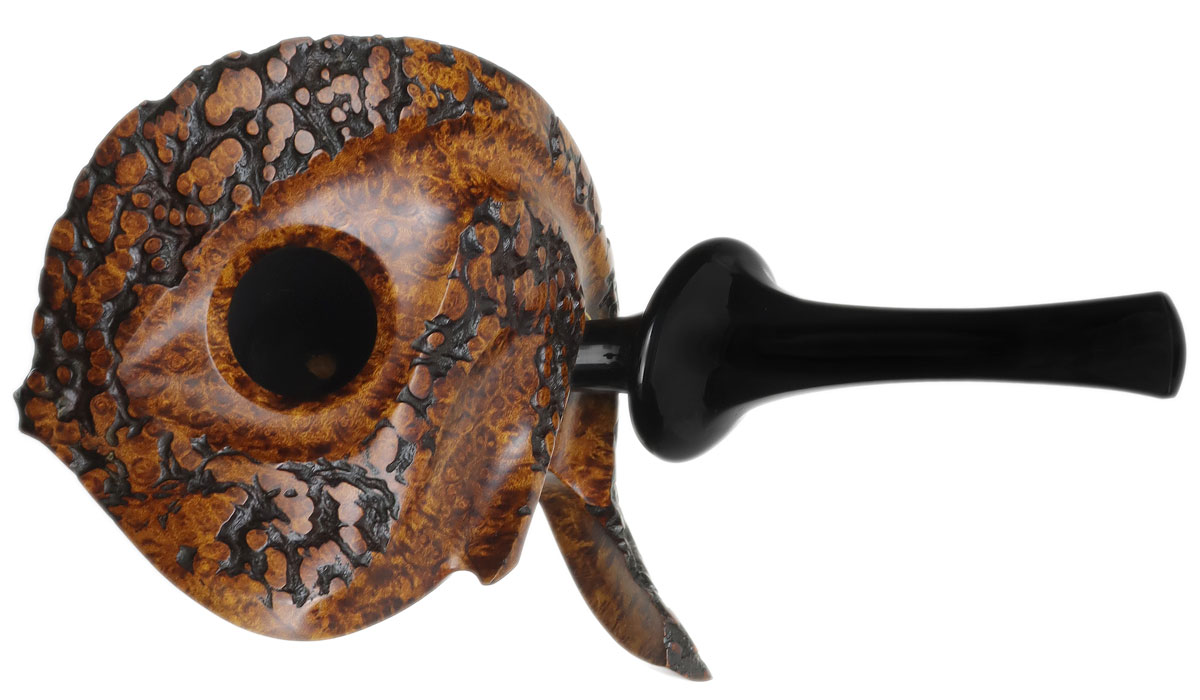
Alex Florov's shaping style centers around remarkably complex compositions that include a truly incredible amount of painstaking detail, the American artisan's work primarily taking inspiration from the Japanese school of pipe making. That inspiration is showcased especially well in pipes such as this Manta Ray, a shape whose progenitor, the Manta, was crafted by legendary Japanese artisan Hiroyuki Tokutomi. Compared to the Manta, which has a more compressed profile, this pipe displays an expressive and impressive breadth, its entire stummel centered at the rounded heel and seemingly blossoming out of this curved basin of briar. This flare terminates in a firm ridgeline that outlines the entirety of the stummel's top, situated above another, similar ridgeline that follows nearly the same trajectory: its presence emphasizing both the stummel's firm lines and defining the thickness of this silhouette's most intriguing feature. At the rear half of the stummel, the briar begins tapering toward a long, curling structure immediately reminiscent of the tail of this pipe's enormous eponymous Batoid inspiration, its carving belying the static nature of briar in favor of line work that evokes a feeling of dynamic momentum and implied motion. The tail's flicked upturn at the end further enhances the illusion of motion and draws the eye to the aft side of this pipe, where an inlaid band of brass right behind the start of the tail's taper marries the briar to a black vulcanite stem. This stem is not a standard variation by any means, being a lengthy taper whose start is marked by a broad, bulbous, canted expansion ring at the base, itself also reminiscent of the tail, though as if it were in the midst of a swift glide through the ocean's tide.
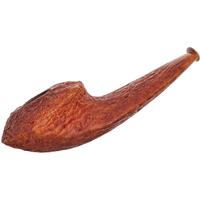
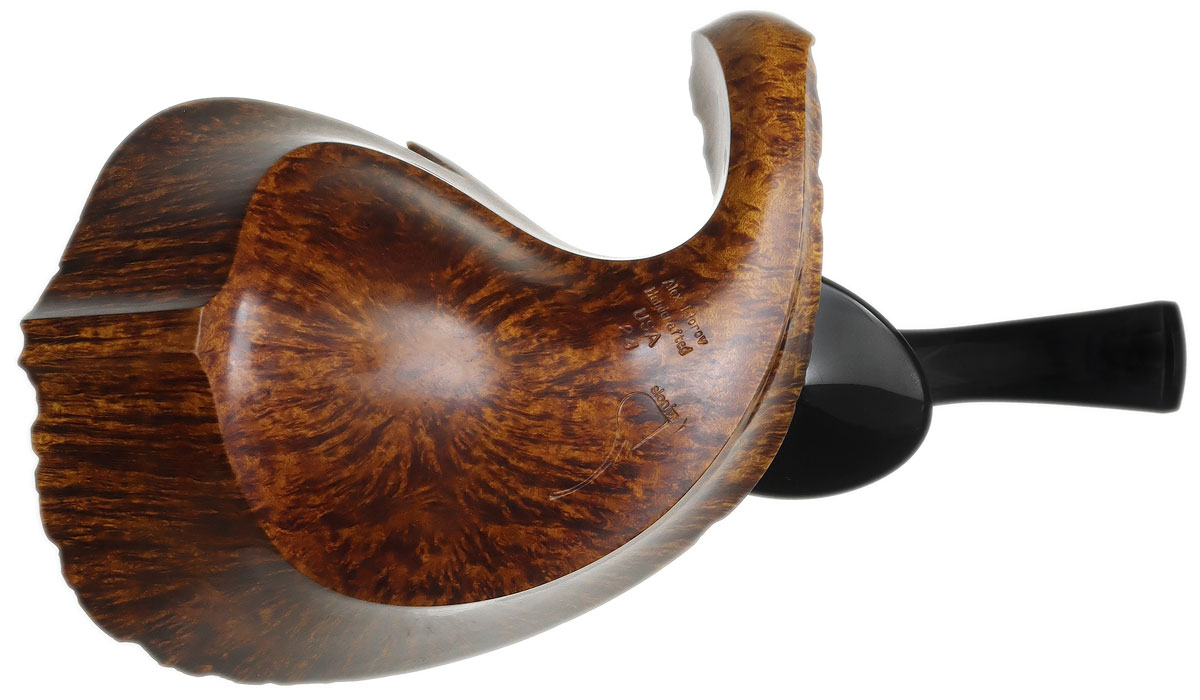
With the tail's curve to the left side, an open area of briar is revealed, dipped very slightly as it's crossed by the topmost ridge defining the upper stummel and marking a smooth, hollow-carved section of briar that wraps around the aft portion of the pipe to the rim. Another section of briar like this one is present between the rim and tail: twin peninsulas of smooth burl that stand out sharply against the rugged plateau covering the rest of this pipe's top side. There's an incredible degree of implied momentum present at the flanks of this shape, where the bowl's flanks rise higher than the fore and aft, its twin ridges creating a draping look like a manta's fins ready to descend and propel it through the sea. At the fore of the bowl, another pair of ridges line the briar, though these two are vertical and frame an impressively small area, calling to mind a ray's Cephalic fins and subtly urging the eye forward. At the underside, the plump central area of briar is enhanced thanks to a continuous and understated hollow carving at the edge of the stummel's lowermost wrapping ridgeline: creating extra softness to appreciate in the hand and further underscoring Florov's talent for rendering massively sophisticated pipes. Dressed in a warm, rich stain, the stummel reveals an expectedly phenomenal showing a of grain, with the lower basin peppered by birdseye and surrounded by a sunburst pattern of flickering flame grain, topped by plateau interspersed with areas of far more dense birdseye.
-John McElheny