


 EN
EN
 JA
JA ZH
ZH





 All New Pipes
















Ron L.
Badges


Reviews
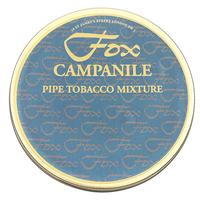


James J. Fox - Campanile 50g
Description Not Complete
Reading the blend ingredients, I think there is a tobacco ingredient that wasn't highlighted, or maybe my olfactory and taste senses are failing me. It's described as an Oriental, Virginia, Turkish blend. One of those Orientals or Turkish leaves is latakia, a leaf that is grown and cured in Turkey too. It dominates the blend, making it a bit unpleasant, diminishing the sweet pleasure of the Virginias. It's strong so be prepared, but not up to my sensibilities. Those who like a strong "English-like" blend might like this.
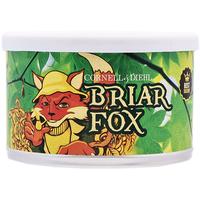
Cornell & Diehl - Briar Fox 2oz
Who Has Dessert All Day?
No one eats strawberry shortcake for every meal. For me, tobaccos are the same. I have my favorite foods but don’t eat them all day. I also love a good filet, pastrami with mustard on rye, and French toast for breakfast. Each has its own flavors, textures, and nasal notes enjoyed at different times for various reasons. Briar Fox isn’t my dessert, but it’s a pleasant between-meals coffee break. More temperate than Stokkebye Luxury Flake or Robert McConnell Scottish Flake, it imparts their undaunted sweetness at a milder level with a gentle peppery tone towards the end of the bowl. The burley lends a stealthy bodied undertone that doesn’t blast me with a nicotine bomb. Overall it’s blended well with tastes of a light snack.
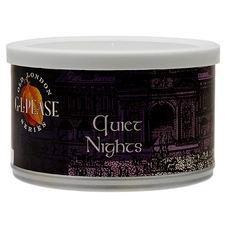
G. L. Pease - Quiet Nights 2oz
Virginia Lovers Rejoice
My palette favors virginia blends. For example, Peter Stokkebye Luxury Twist or the now out-of-business Sutliff Sweet Virginia 707 (happy I have a goodly supply stored in vacuum sealed mason jars) are my favorites. Latikia and perique tend to overwhelm me so I avoid blends fortified with them. For example, traditional English blends overpower my palette with a harsh smokiness (for me but not maybe others) so it was with skepticism I tried G.L Pease Quiet Knight. The label says its base is red virginia, but it's laced with orientals, Cyprus latikia, and perique making it sound like a typical English tobacco. I guess I just tried it on a whim since reviews indicated it wasn't strong. They were right. I've never smoked latakia and perique in tobacco blends without distaste. Wow! I was surprised. From the first draw to the last I could taste the natural sweetness of the red virginia with an ever so subtle complexity that the others added without detracting. The virginia top note remained constant to the bottom of the bowl, while the others touched it with a subtle, enjoyable complexity. It won't be a go-to tobacco but I am assured when I do it will be a pleasant diversion.
Favorite Products
Blog's Commented on
Behind the Scenes with Smokingpipes' Customer Service
- ► Having communicated with the Customer Service people on a few occasions I can summarize my experience saying it’s like I’m interacting with a concerned friend.
In Appreciation of Sandblasted Pipes
- ► I'm still ambivalent about sandblasting. In instances it creates a textured look and feel, but can be overused. Many years ago a notable NYC tobacconist and pipe designer admonished me when I asked if he ever made sandblast pipes. His rebuke was that sandblast is an excuse for selling bad briar at premium prices. He wanted all of his own to clearly show the grain's tightness. With sandblasting he said that many of those features are hidden. As I matured my knowledge of pipe smoking I modified. Yes, sometimes stain and sandblast is used to unscrupulously hide flaws and grain structure, but if you've developed a practiced eye, you can tell if the briar is a worthy piece underneath all of that decoration. As this article mentions, sandblasting removes the "softer" wood from between the harder, so if you see tightly spaced valleys between the high points of the texture, you probably have a great briar. Tightly packed burls nodes with compressed wood rings down the side is one of many examples you can see brought out with sandblasting. So it can be a terrific arrow in the quiver of an artisan if used honestly. Buyers just need to develop a practiced eye, especially when they buy online.